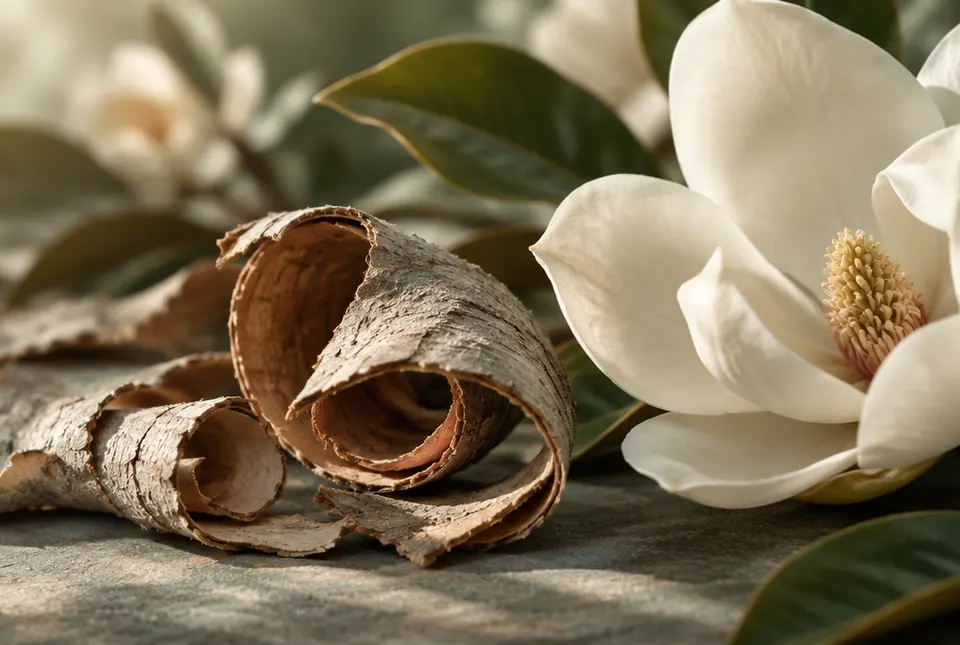
Magnolia bark comes from Magnolia officinalis, a deciduous tree native to the mountains of central China. The thick, aromatic bark is stripped from the trunk, branches and roots and dried. In traditional Chinese practice it is known as hou po and has been used for around two thousand years.
It is traditionally used to support relaxation and was also used for digestive comfort. Its compounds of interest are honokiol and magnolol, two closely related polyphenols. Researchers have studied magnolia bark, often combined with phellodendron bark in a branded blend, in small, short trials looking at stress and mood. Those trials reported no significant side effects, but they were small and the evidence is limited. Magnolia bark has no authorised health claim.
On labels you will see magnolia bark extract, Magnolia officinalis bark extract, or extracts standardised to honokiol and magnolol. It is often paired with phellodendron bark, and the two are sold together in a well-known combination.