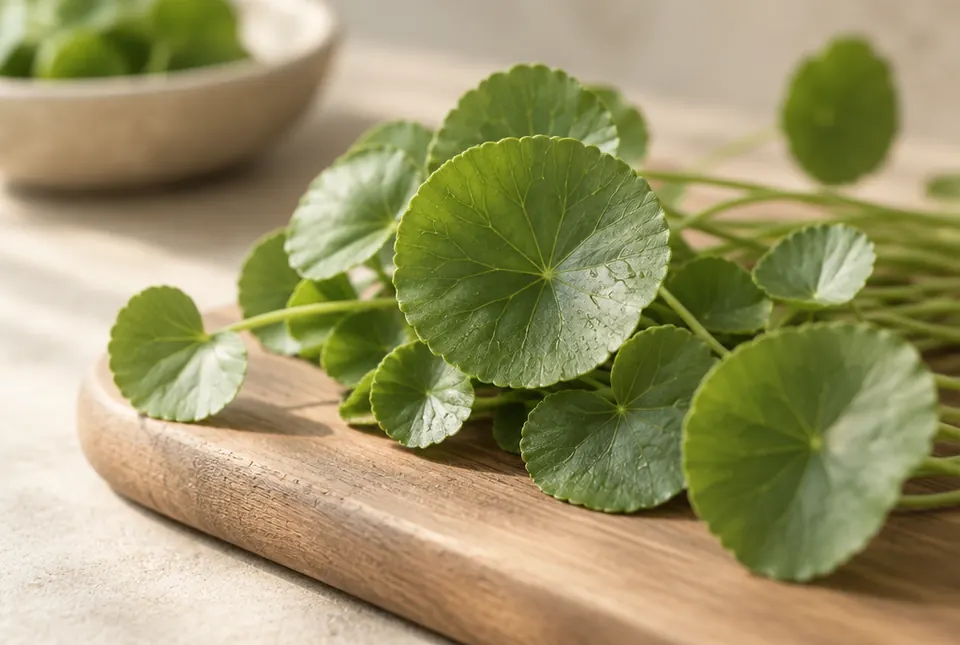
Gotu kola, Centella asiatica, is a low-growing herb with small fan-shaped leaves that thrives in damp, shady places across India, Sri Lanka, South-East Asia and southern Africa. It belongs to the same broad plant family as parsley and carrots, and in South-East Asia the fresh leaves are eaten in salads and blended into drinks.
It has a long history in both Ayurvedic and traditional Chinese practice, where it is traditionally used to support mental clarity and circulation. Its compounds of interest are triterpenes, including asiaticoside, madecassoside and asiatic acid. Researchers have studied these compounds, including in skincare, but human evidence for oral supplements is limited and it has no authorised health claim.
On labels you will see gotu kola, Centella asiatica leaf or herb extract, or extracts standardised to triterpenes. In parts of India it is also called brahmi, which can cause confusion with Bacopa monnieri, so the Latin name is the safest guide.