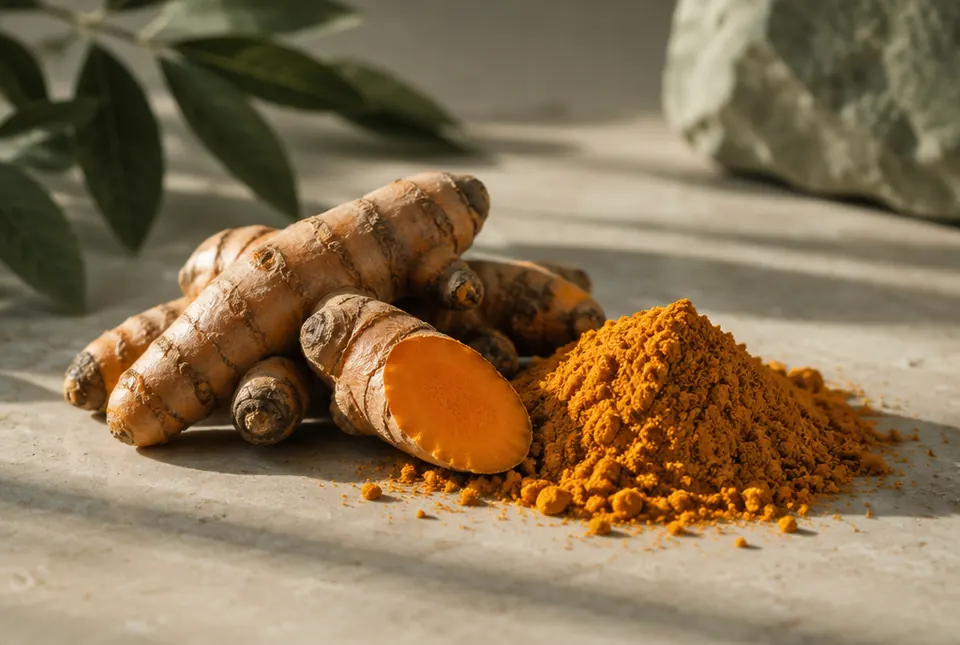
Turmeric is the bright golden root, or rhizome, of Curcuma longa, a member of the ginger family grown mainly in India and South-East Asia. It has been a staple of Indian cooking for thousands of years and is traditionally used in Ayurveda to support joint comfort and digestion.
Its colour and much of its research interest come from curcuminoids, of which curcumin is the main one. Ground turmeric spice contains only a few per cent curcumin, so supplements usually use extracts standardised to around 95% curcuminoids. Curcumin on its own is poorly absorbed, which is why it is often paired with black pepper extract (piperine) or made into specialised forms designed to improve uptake.
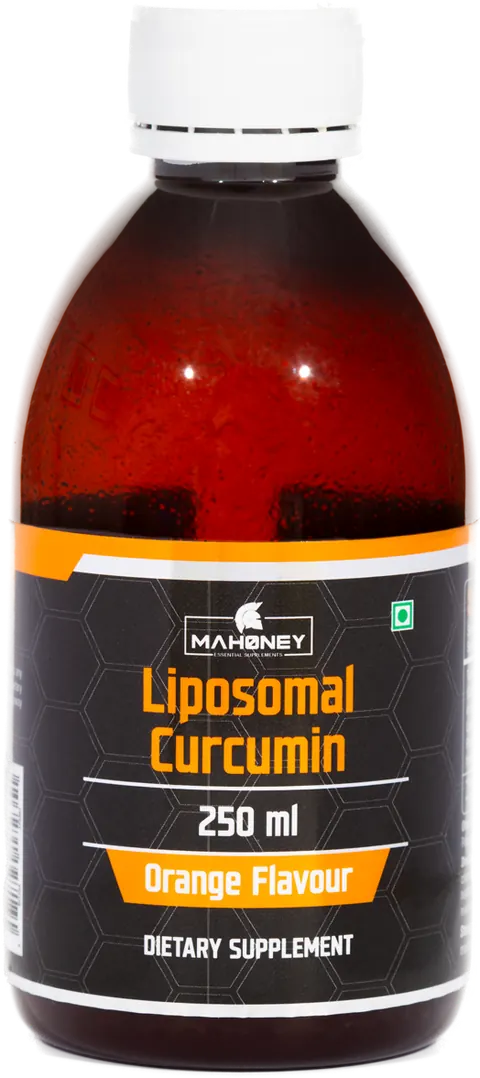
On labels you may see turmeric root powder, Curcuma longa extract, curcumin, curcuminoids, or branded forms described as liposomal, phytosome or micellar. Researchers have studied curcumin in many trials looking at joint comfort and inflammation markers, with mixed results, and it has no authorised health claim in the UK.