Lycopene is the bright red pigment that gives tomatoes, watermelon and pink grapefruit their colour. It belongs to the carotenoid family, alongside beta-carotene and lutein, but unlike beta-carotene the body does not turn it into vitamin A. It is a carotenoid antioxidant and one of the most common carotenoids in the blood.
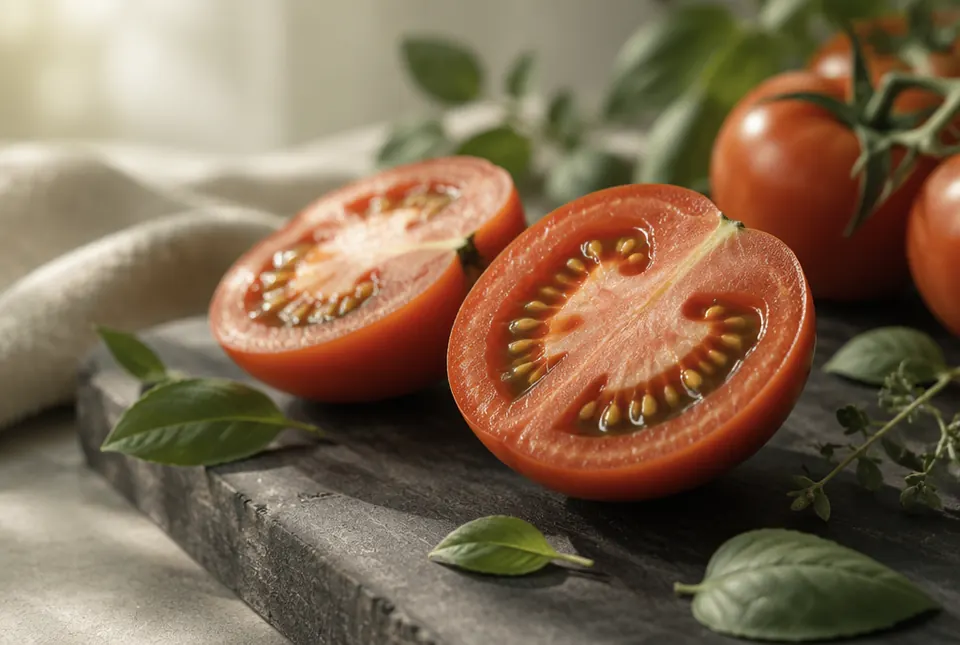
Tomatoes and tomato products provide most of the lycopene in a typical diet. Interestingly, cooked and processed tomatoes, such as passata, purée and tomato sauce, release lycopene more readily than raw tomatoes, and eating them with a little fat, such as olive oil, helps absorption because lycopene is fat-soluble.
Lycopene supplements are usually made from tomato extract, though some use lycopene produced by fermentation or synthesis. They are typically sold in softgels with oil to aid absorption. Researchers have studied lycopene in observational and small intervention studies, but EFSA has not authorised any health claims for it, so the best-supported advice is simply to enjoy plenty of tomato-rich meals.