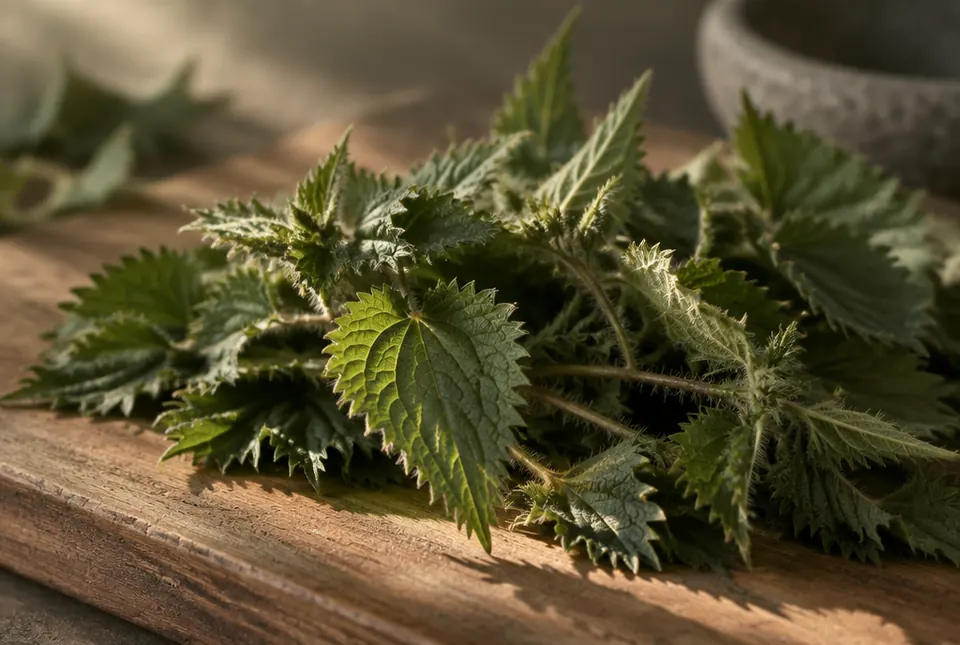
Stinging nettle (Urtica dioica) needs little introduction to anyone who has walked through a British hedgerow in shorts. Beneath its fierce reputation is one of the most useful wild plants in Europe. The young leaves have long been cooked into soups and teas, the fibres were once woven into cloth, and both the leaf and the root have a place in herbal tradition.
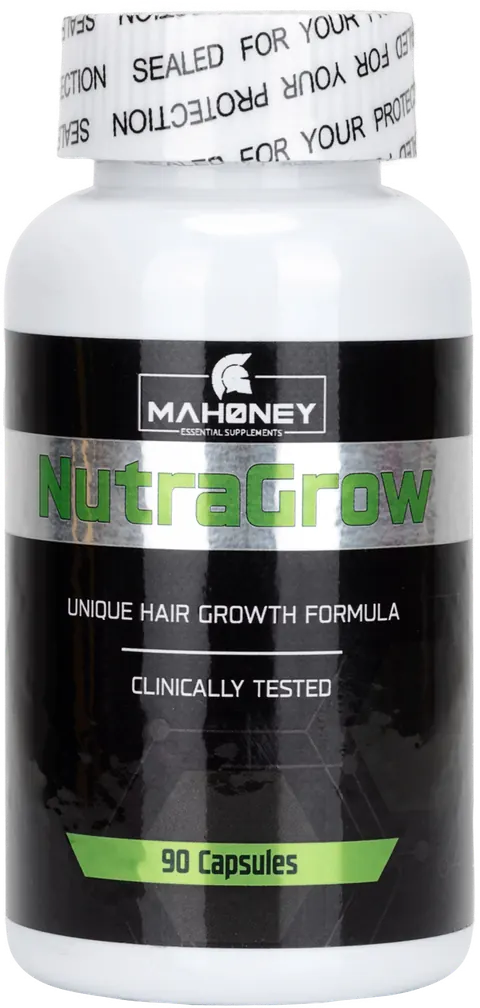
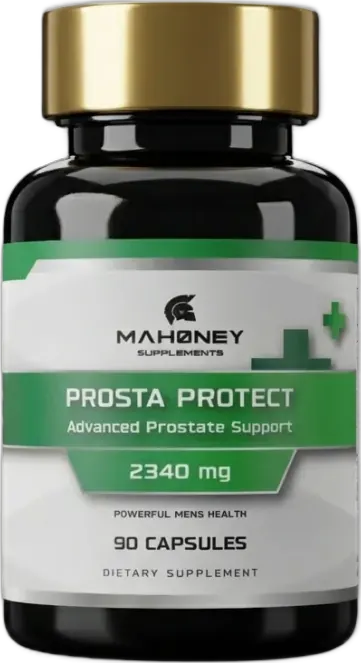
The two parts are used for different things. Nettle root, the dried underground root and rhizome, is traditionally used to support prostate health, and European herbal regulators recognise nettle root preparations as traditional herbal products for urinary symptoms linked to an enlarged prostate, once a doctor has ruled out anything more serious. Nettle leaf is traditionally used to support healthy hair. On labels you will see nettle root extract, nettle leaf or Urtica dioica, often in men's blends with pumpkin seed and saw palmetto, or in hair formulas.
Nettle root has been studied in eight randomised, placebo-controlled trials for urinary symptoms in men, but European regulators judged the evidence not strong enough to go beyond traditional use. Nettle root was first used for urinary complaints in the 1950s, while the use of nettle leaf for hair rests mainly on folk tradition.