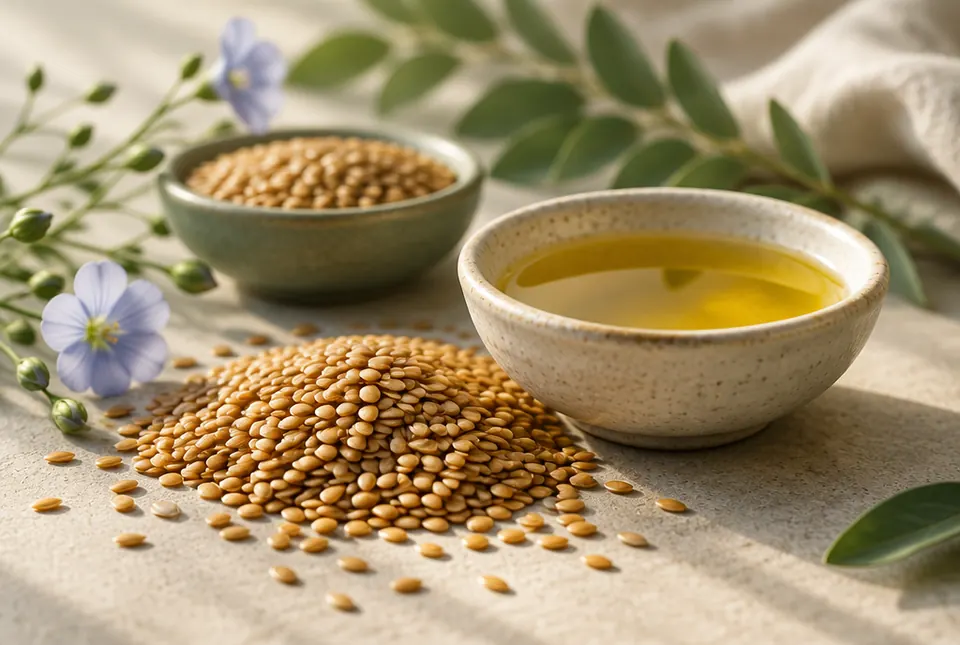
Flaxseed oil, also called linseed oil, is pressed from the small brown or golden seeds of the flax plant, Linum usitatissimum, which has been grown for food and fibre for thousands of years. It is one of the richest plant sources of alpha-linolenic acid, or ALA, the plant form of omega-3 fat.
ALA is an essential fatty acid, meaning the body cannot make it and needs it from food. Other sources include chia seeds, walnuts, hemp seeds and rapeseed oil. The body can convert a small proportion of ALA into the long-chain omega-3s EPA and DHA found in oily fish, but conversion is limited, especially to DHA, so flaxseed oil is not a like-for-like swap for fish oil.
Flaxseed oil is sold as a bottled oil and in softgels, and is popular with vegetarians and vegans. It is delicate and easily damaged by heat and light, so it is best kept cool and not used for cooking. ALA contributes to the maintenance of normal blood cholesterol levels, with the beneficial effect obtained from a daily intake of 2 g of ALA.