Free US delivery over $250
Nutra Formulations
Nutrients and compounds

Flaxseed oil

Oil pressed from linseed, rich in the plant omega-3 ALA.

Why it’s used: ALA contributes to the maintenance of normal blood cholesterol levels (from 2 g daily).

Shop 1 product with flaxseed oil
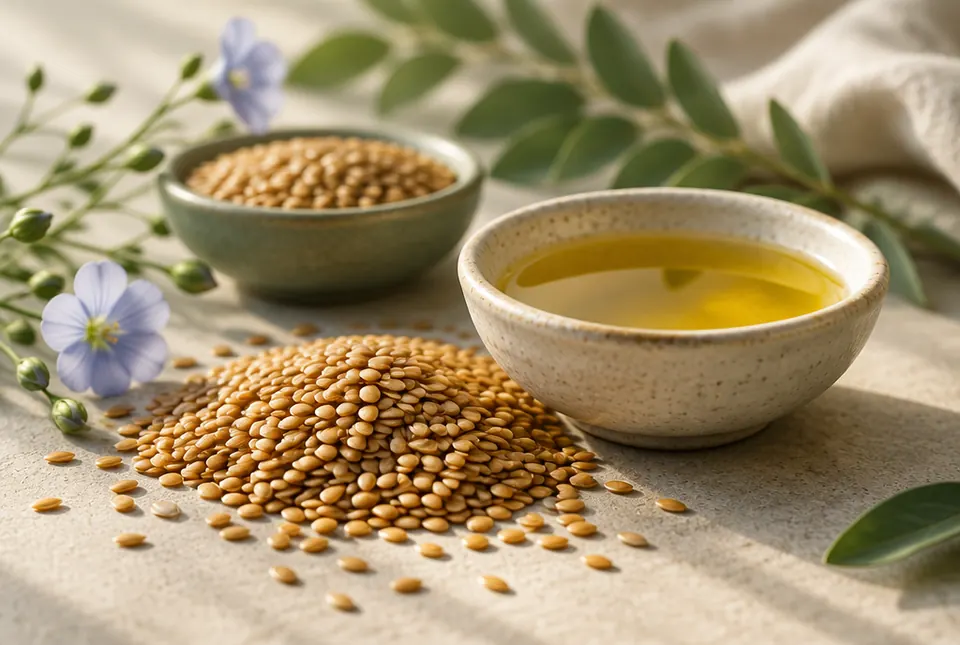
golden flaxseeds and a small dish of oil
About

What is flaxseed oil?

Flaxseed oil, also called linseed oil, is pressed from the small brown or golden seeds of the flax plant, Linum usitatissimum, which has been grown for food and fibre for thousands of years. It is one of the richest plant sources of alpha-linolenic acid, or ALA, the plant form of omega-3 fat.

ALA is an essential fatty acid, meaning the body cannot make it and needs it from food. Other sources include chia seeds, walnuts, hemp seeds and rapeseed oil. The body can convert a small proportion of ALA into the long-chain omega-3s EPA and DHA found in oily fish, but conversion is limited, especially to DHA, so flaxseed oil is not a like-for-like swap for fish oil.

Flaxseed oil is sold as a bottled oil and in softgels, and is popular with vegetarians and vegans. It is delicate and easily damaged by heat and light, so it is best kept cool and not used for cooking. ALA contributes to the maintenance of normal blood cholesterol levels, with the beneficial effect obtained from a daily intake of 2 g of ALA.

What the research says

Evidence, not anecdote.

3 findings behind this ingredient. Hover a card for the detail and the source.

Meta-analysis2023

Diets with a lower linoleic acid to ALA ratio, achieved with plant oils, lowered total and LDL cholesterol.

Systematic review and meta-analysis of randomised controlled trials in adults. Raising plant ALA relative to linoleic acid reduced total cholesterol by 0.09 mmol/L, LDL by 0.08 mmol/L and triglycerides slightly, with no effect on HDL.

Meta-analysis2018

Flaxseed oil was among the plant oils that lowered LDL cholesterol more than butter.

Network meta-analysis of 54 randomised trials comparing oils and solid fats. Flaxseed, rapeseed, olive, sunflower and other plant oils lowered LDL cholesterol by 0.23–0.42 mmol/L more than butter.

Meta-analysis2024

Flaxseed oil lowered triglycerides and C-reactive protein in people on haemodialysis.

Systematic review and meta-analysis of randomised controlled trials in haemodialysis patients. Flaxseed oil significantly reduced triglycerides and CRP, with improvements in LDL, HDL and total cholesterol at doses above 10 g a day.

In our range

Supplements with flaxseed oil.

Questions

Asked before you buy.

Can't see yours? Ask our team, answered within a working day.

Is flaxseed oil as good as fish oil?

Not as a direct swap. Flaxseed oil supplies ALA, while fish oil supplies EPA and DHA. Your body converts only a small amount of ALA into EPA and even less into DHA. Flaxseed oil has its own authorised claim for maintaining normal blood cholesterol.

How much flaxseed oil gives 2 g of ALA?

About a third of a tablespoon, since one tablespoon of flaxseed oil provides roughly 7.3 g of ALA. Softgels contain much less oil, so check the label for the ALA amount per serving rather than the total oil.

Can I cook with flaxseed oil?

It is best not to. Flaxseed oil is rich in delicate polyunsaturated fats that break down with heat. Use it cold, drizzled over salads, porridge or vegetables, keep the bottle in the fridge, and use it within the time stated on the label.

Shop by goal
Often found with
Independent experts

Experts on flaxseed oil.

Videos from doctors, research scientists and registered dietitians, for general education. They are independent of Nutra Formulations, do not refer to our products and are not medical advice for you.

Flaxseed vs Linseed: What Is the Difference?

Veronica Rouse, RD · The Heart Dietitian on YouTube

Sources
  1. Flaxseed and Flaxseed Oil · National Center for Complementary and Integrative Health, 2020
  2. Omega-3 Fatty Acids: Fact Sheet for Health Professionals · NIH Office of Dietary Supplements, 2023
  3. Great Britain nutrition and health claims (NHC) register · Department of Health and Social Care (GOV.UK), 2024

Information only, not medical advice. If you take medication, are pregnant or breastfeeding, speak to your GP or pharmacist first.

Find your protocol

Not sure where to start?

Six quick questions match you to the products in our range that fit your goal, with the reasons why.

Start the assessment