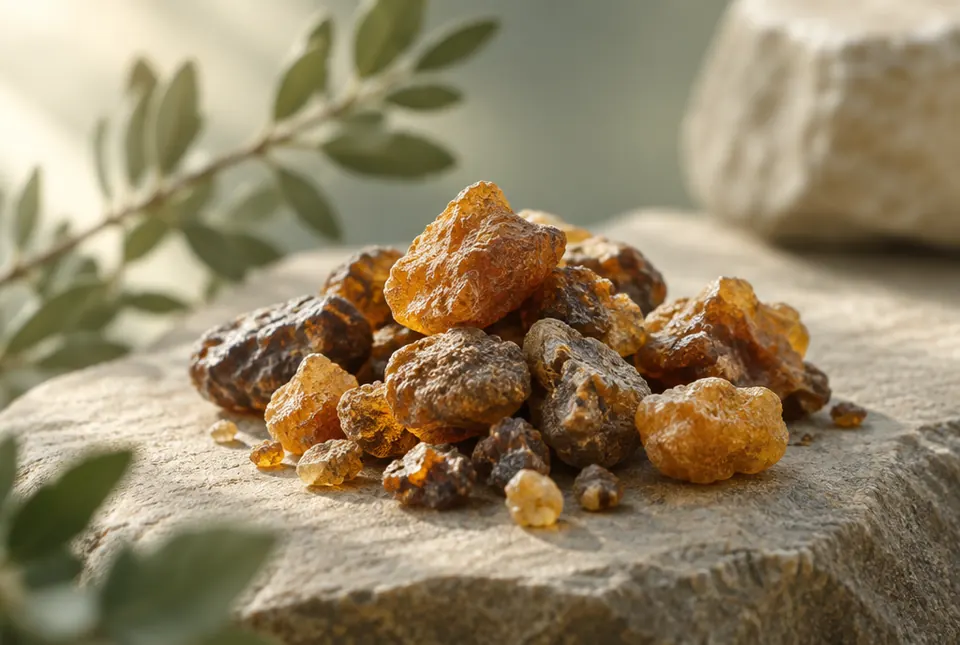
Guggul is a sticky gum resin from Commiphora mukul (also called Commiphora wightii), the mukul myrrh tree, a small thorny shrub that grows in the dry regions of India, Pakistan and Bangladesh. When the bark is cut, it releases a fragrant yellowish resin that hardens on contact with air. It is a close relative of myrrh.
Guggul has been used in Ayurveda for thousands of years, often in combination formulas, and it is traditionally used to support normal cholesterol and metabolism. Its compounds of interest are plant sterols called guggulsterones. Researchers have studied standardised guggul extracts in a handful of trials with mixed results, and it has no authorised health claim.
On labels you will see guggul, gugulipid, Commiphora mukul resin extract or extracts standardised to a percentage of guggulsterones. That percentage is the most useful figure for comparing products, because raw resin and purified extracts differ considerably. In Ayurvedic formulas, guggul is often blended with other herbs and resins rather than used alone.