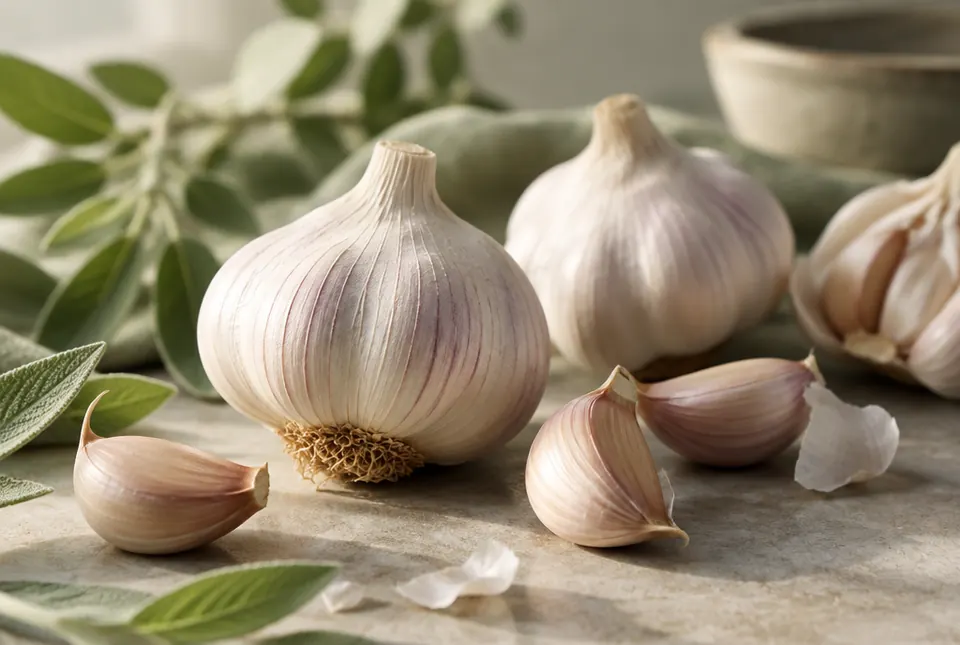
Garlic, Allium sativum, is a bulb in the onion family that has been grown and eaten for at least five thousand years. It is thought to come from Central Asia and is now a staple of kitchens around the world. Each bulb is made of cloves wrapped in papery skin.
Garlic has a place in almost every folk tradition, and it is traditionally used to support heart health and normal circulation. When a clove is crushed or chopped, an enzyme turns a compound called alliin into allicin, which gives fresh garlic its sharp smell. Researchers have studied garlic preparations in many trials, including on blood pressure and cholesterol, with mixed results, and it has no authorised health claim.
Supplements come in several forms, and they are not interchangeable. On labels you will see garlic powder, garlic oil, odourless garlic, or aged garlic extract, which is made by steeping garlic for months and is rich in a different compound, S-allyl cysteine. Some products are standardised to allicin potential.