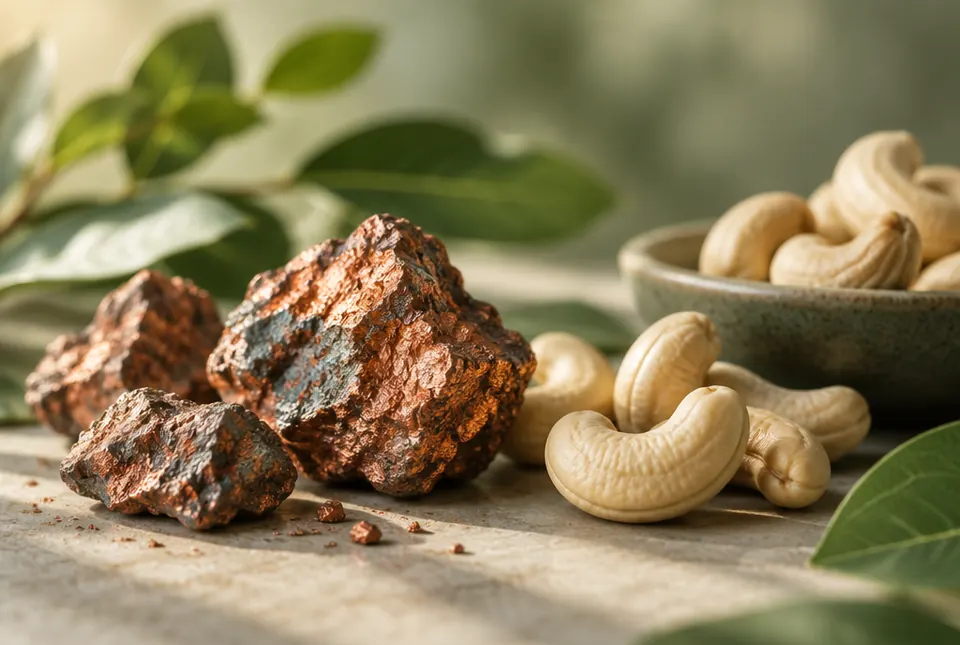
Copper is an essential trace mineral that helps produce red and white blood cells and triggers the release of iron to form haemoglobin, the substance that carries oxygen around the body. Good sources include nuts, shellfish, seeds and offal.
Copper contributes to normal hair pigmentation, the maintenance of normal connective tissues and normal immune function. The body needs only small amounts, and most people get all they need from a varied, balanced diet.
In supplements, copper is often listed as cupric oxide, cupric sulphate, copper gluconate or a copper amino acid chelate such as copper bisglycinate. The NIH notes it is not known whether one form is better than another. Copper often appears in products that also contain zinc, because high zinc intakes reduce the amount of copper the body can absorb, and including a little copper keeps that balance in mind. Amounts are small, usually listed in milligrams (mg) or micrograms (µg), and the upper guidance covers copper from food, water and supplements together.