Free US delivery over $250
Nutra Formulations
Minerals

Copper

An essential trace mineral found in shellfish, nuts and seeds.

Why it’s used: Contributes to normal hair pigmentation, the maintenance of normal connective tissues and normal immune function.

Shop 1 product with copper
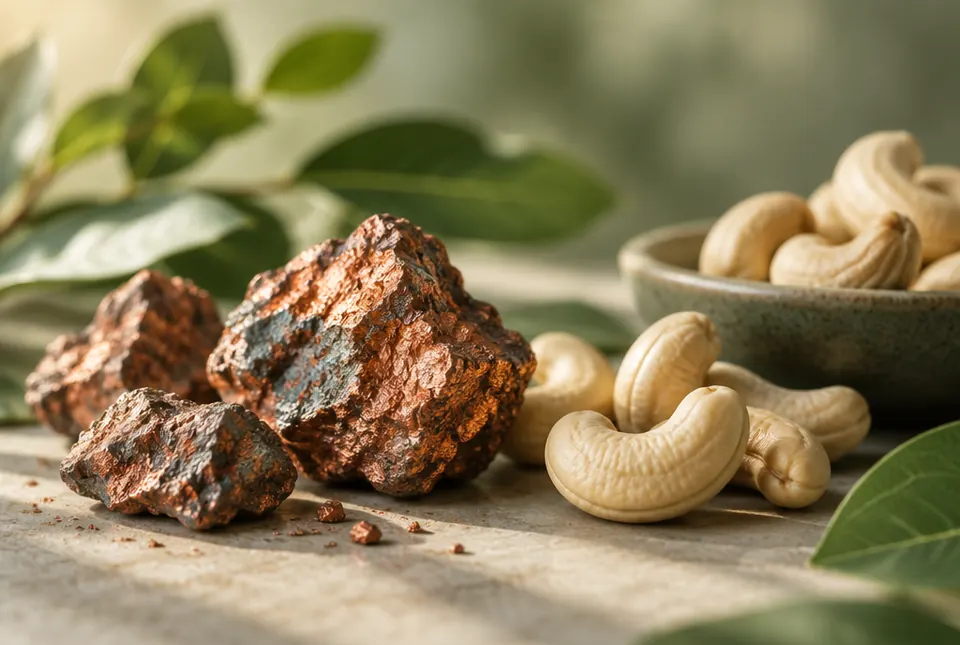
raw copper ore nuggets beside cashew nuts
About

What is copper?

Copper is an essential trace mineral that helps produce red and white blood cells and triggers the release of iron to form haemoglobin, the substance that carries oxygen around the body. Good sources include nuts, shellfish, seeds and offal.

Copper contributes to normal hair pigmentation, the maintenance of normal connective tissues and normal immune function. The body needs only small amounts, and most people get all they need from a varied, balanced diet.

In supplements, copper is often listed as cupric oxide, cupric sulphate, copper gluconate or a copper amino acid chelate such as copper bisglycinate. The NIH notes it is not known whether one form is better than another. Copper often appears in products that also contain zinc, because high zinc intakes reduce the amount of copper the body can absorb, and including a little copper keeps that balance in mind. Amounts are small, usually listed in milligrams (mg) or micrograms (µg), and the upper guidance covers copper from food, water and supplements together.

What the research says

Evidence, not anecdote.

3 findings behind this ingredient. Hover a card for the detail and the source.

Meta-analysis2014

People with osteoporosis had lower blood copper levels than healthy controls, pointing to copper's role in bone health.

Meta-analysis of eight observational studies with 2,188 people. People with osteoporosis had significantly lower serum copper, zinc and iron than healthy controls; the authors called for better-controlled studies.

Observational2022

Higher copper intake was linked with higher bone mineral density and lower odds of osteoporosis in US adults.

Analysis of 8,224 adults in the US NHANES survey. People in the top two quarters of total copper intake had roughly half the odds of osteoporosis of those in the lowest quarter, after adjusting for other factors.

Observational2012

Young people with premature greying had lower blood copper levels than matched controls.

Case-control study of 66 people under 20 with premature grey hair and 66 age- and sex-matched controls. Serum copper was significantly lower in those with premature greying, while zinc did not differ.

In our range

Supplements with copper.

Questions

Asked before you buy.

Can't see yours? Ask our team, answered within a working day.

Why is copper added to zinc supplements?

High doses of zinc reduce how much copper the body can absorb, which over time can lead to low copper levels, anaemia and weaker bones. Including a little copper alongside zinc is a way of keeping that balance in mind.

How much copper do I need?

Adults aged 19 to 64 need 1.2mg of copper a day, and most people get this from nuts, shellfish, seeds and offal. The NHS says a total of 10mg or less a day from all sources is unlikely to cause any harm.

Does copper affect hair colour?

Copper contributes to normal hair pigmentation, which is an authorised description of its role. Getting enough copper from your diet supports that normal process. It will not change your natural shade or restore colour that has faded with age.

Shop by goal
Often found with
Sources
  1. Others: vitamins and minerals · NHS, 2020
  2. Copper: fact sheet for consumers · NIH Office of Dietary Supplements, 2022

Information only, not medical advice. If you take medication, are pregnant or breastfeeding, speak to your GP or pharmacist first.

Find your protocol

Not sure where to start?

Six quick questions match you to the products in our range that fit your goal, with the reasons why.

Start the assessment