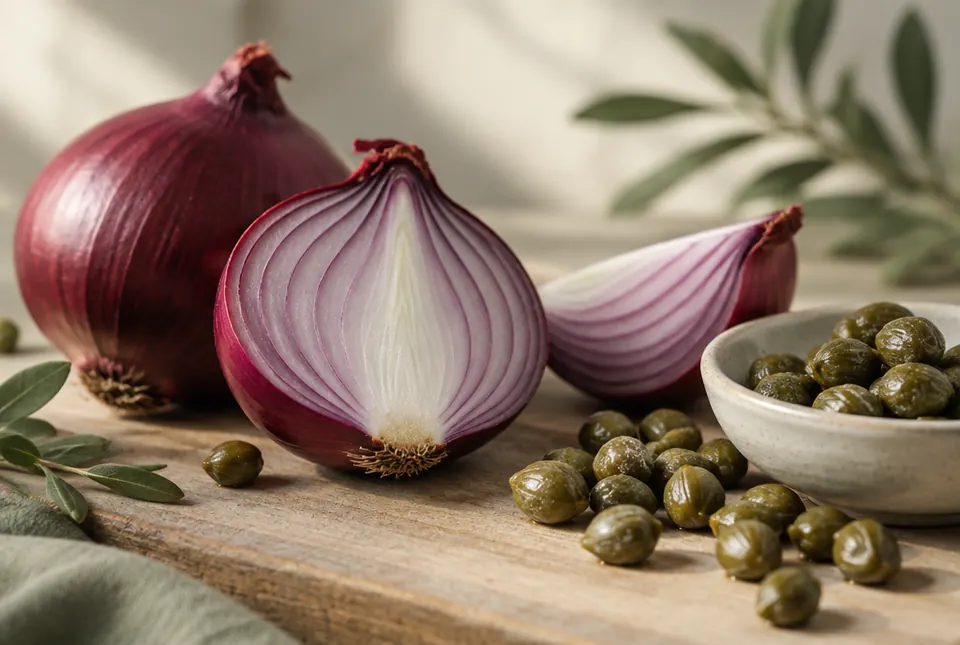
Quercetin is one of the most common flavonoids in the diet. Flavonoids are plant compounds that contribute to the colours of fruit and vegetables and help protect plants from stress. Quercetin is a flavonoid antioxidant, and in food it is usually attached to a sugar, forming compounds called glycosides.
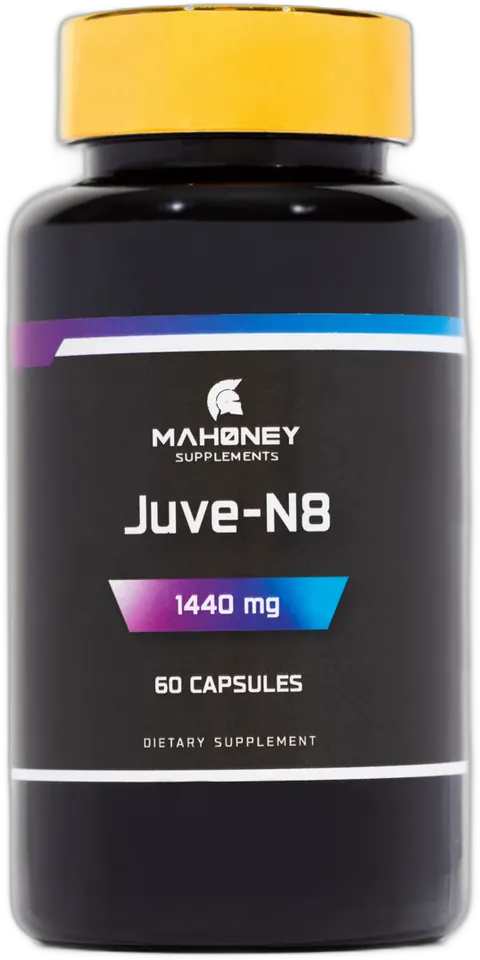
Onions are one of the best sources, and their quercetin glycosides are absorbed comparatively well. Capers, apples, kale, berries, broccoli and tea also contribute. Supplements are concentrated plant extracts, and may appear on labels as quercetin or quercetin dihydrate.
Quercetin on its own is not very well absorbed, so you may see it in special forms such as quercetin phytosome, which pairs it with phospholipids, or combined with bromelain or vitamin C. Researchers have studied quercetin in many laboratory studies and in small human trials, with mixed results so far, and EFSA has not authorised any health claim for it. For most people, a colourful diet rich in onions, apples and berries is the natural starting point.