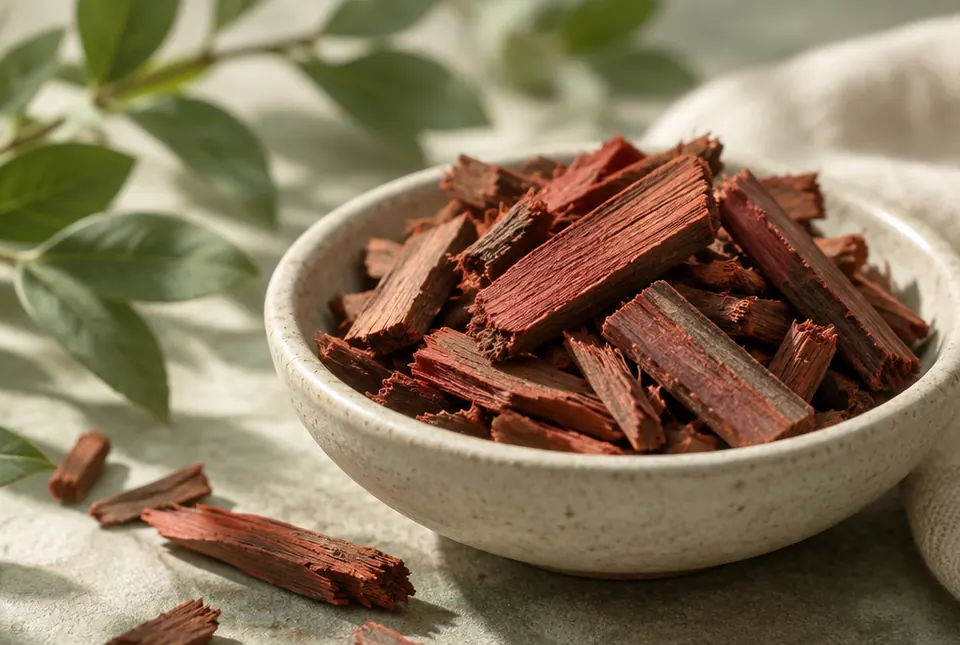
Sappanwood comes from Caesalpinia sappan, also known as Biancaea sappan, a thorny flowering tree native to South-East Asia, southern China and the Indian subcontinent. Its hard, orange-red heartwood contains brazilin, a natural pigment that gives a range of red shades.
For centuries the heartwood has been used as a dye for silk, cotton and leather, and to colour foods and drinks such as rice and noodles in South-East Asia. It also has a long place in Asian traditional practice, including Chinese, Thai and Ayurvedic traditions, and sappanwood is traditionally used in Asian practice for skin. It is known as secang in Indonesia and pattanga in India.
Today you will find Caesalpinia sappan heartwood extract in skin and hair care, often alongside other Asian botanicals. Laboratory studies have explored the antioxidant and anti-inflammatory activity of brazilin and related compounds such as sappanone A and protosappanin, but research in people is still at an early stage.