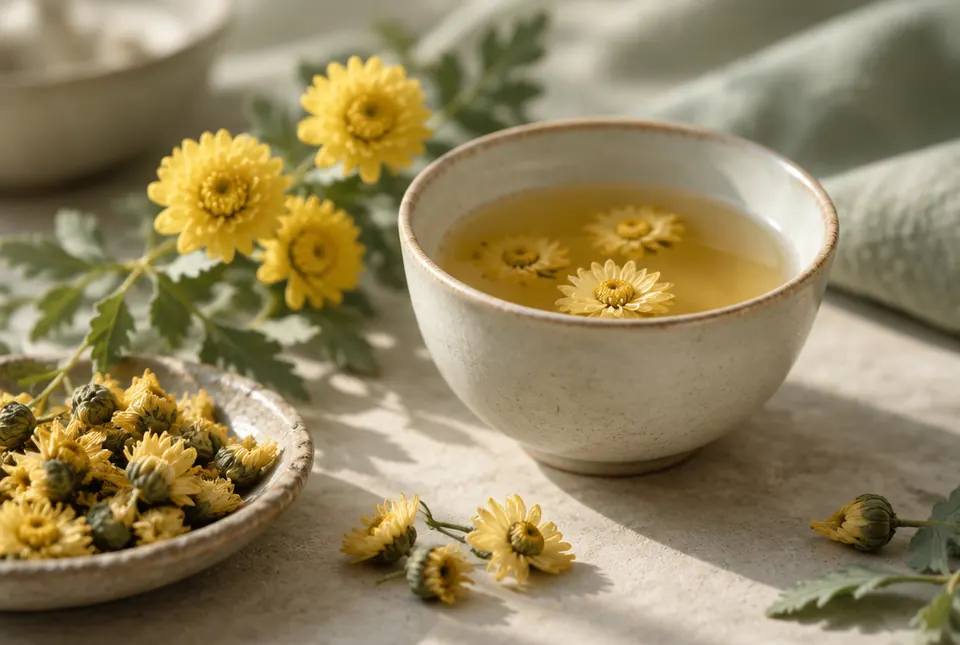
The chrysanthemum used in Asian practice is Chrysanthemum morifolium, known in Chinese as ju hua. Its small yellow or white flowers have been dried and brewed into a fragrant, caffeine-free tea in China for thousands of years, and over the centuries they have also been used to make wine, congee and cakes.
In traditional Chinese practice chrysanthemum is classed as a cool, light herb, and it is traditionally used in Asian practice for skin and scalp, as well as for the eyes and for cooling the body in hot weather. It is listed in the Chinese pharmacopoeia and remains a popular drink across China and Japan. In skin and hair care you will see it on labels as Chrysanthemum morifolium flower extract, often alongside other Asian botanicals.
The flowers are rich in polyphenols and flavonoids, particularly luteolin and its glucosides, along with chlorogenic acids. Laboratory studies have investigated their antioxidant and anti-inflammatory activity, and a 2025 laboratory study found chrysanthemum flower extracts did not cause skin irritation or sensitisation in standard tests. Clinical studies in people are still needed.