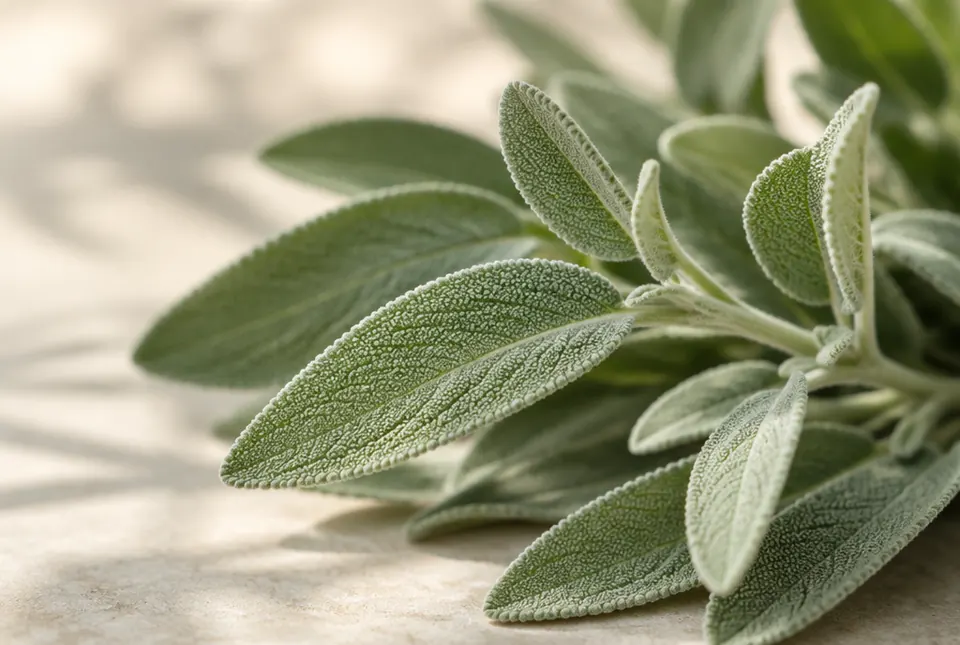
Sage (Salvia officinalis) is the soft, grey-green herb many of us know from stuffing and roast dinners. A native of the Mediterranean, it has been grown in British kitchen gardens for centuries, and its Latin name comes from salvere, to be well, a hint at how highly it was regarded in early herbal practice.
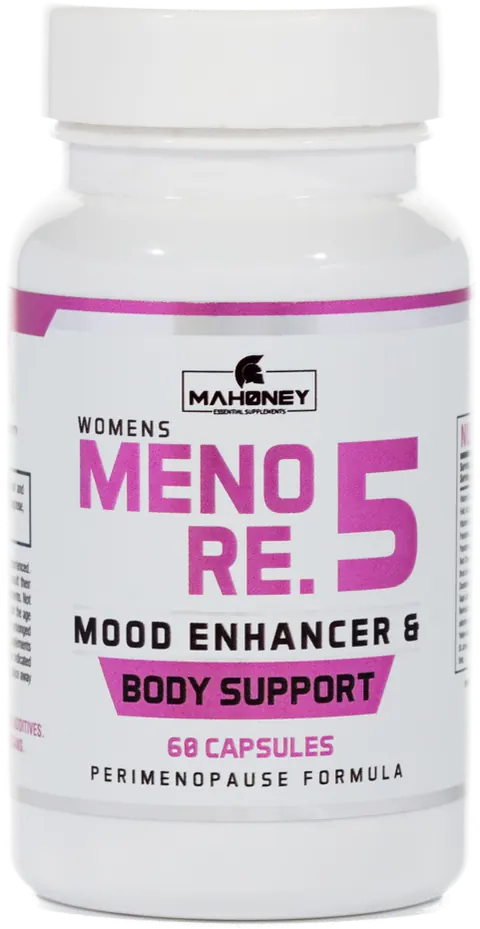
Beyond the kitchen, sage leaf has a long history in European herbal tradition. It is traditionally used to help with hot flushes and excessive sweating during the menopause, and the European Medicines Agency recognises sage leaf preparations as traditional herbal products for this purpose. In supplements you will see it listed as sage leaf, sage leaf powder or sage leaf extract, sometimes made from fresh leaves, either on its own or in menopause blends with red clover, soy isoflavones or black cohosh.
Researchers have studied sage in small trials with women going through the menopause, and a meta-analysis of four studies reported fewer hot flushes compared with placebo. Sage naturally contains thujone, a compound that is harmful in large amounts, which is why good-quality extracts control or remove it and why concentrated sage essential oil is not suitable for taking by mouth.