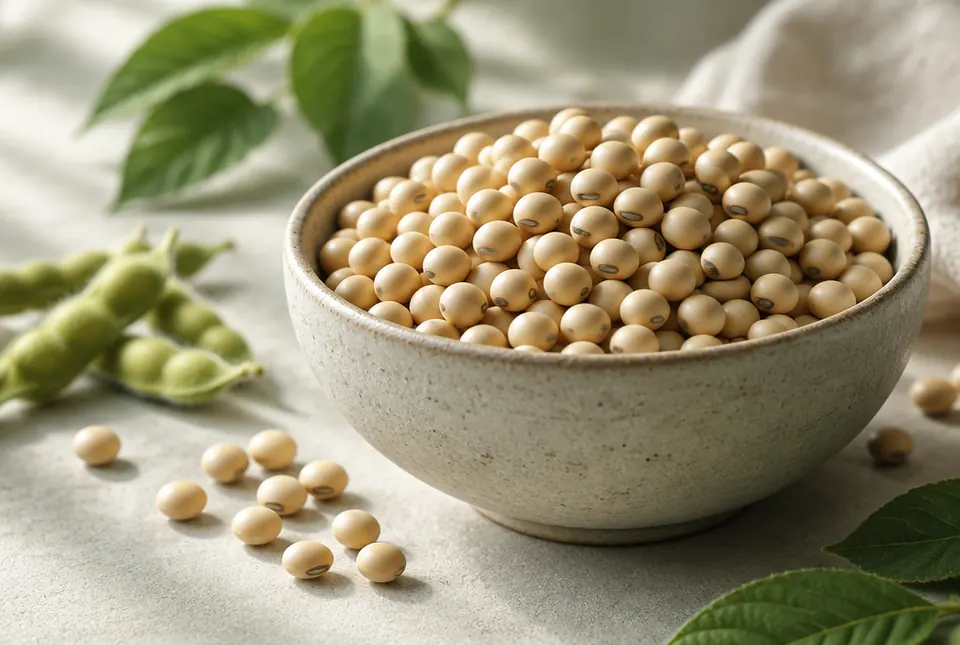
Soy isoflavones are natural plant compounds found in soya beans, with the highest concentration in the germ, the tiny part of the bean that would grow into a new plant. The main ones are genistein, daidzein and glycitein. Their structure is similar to oestrogen, which is why they are often called phytoestrogens.
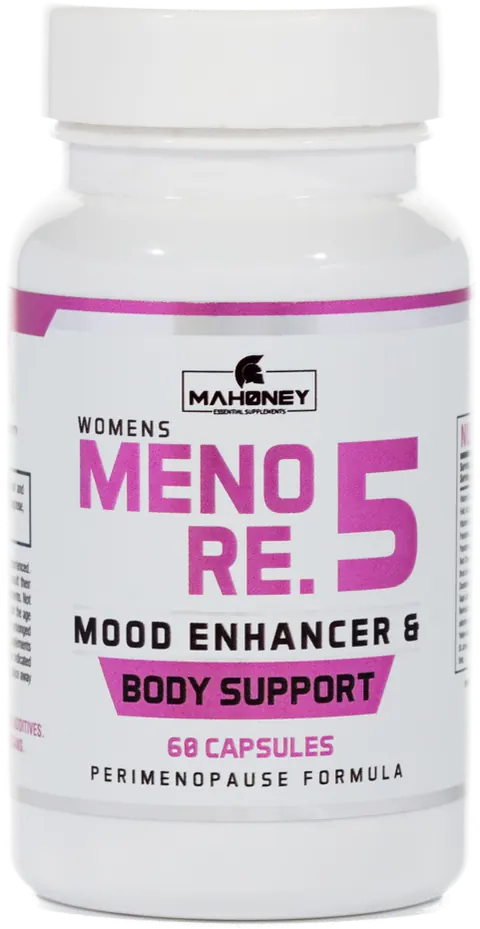
People in East Asia have eaten soya foods such as tofu, miso and soya milk for centuries, so isoflavones are a familiar part of many diets. Supplements are different in that they concentrate isolated isoflavones from soy germ or soya bean extract. On a label you will usually see soy isoflavones or soya germ extract, with the total isoflavone content given in milligrams.
Soy isoflavones are traditionally used to support women through the menopause, and they are often paired with red clover, sage or black cohosh. Researchers have studied them in many trials looking at hot flushes and bone health after the menopause, with mixed findings. Soya is one of the 14 major allergens, so it is always highlighted on the label.