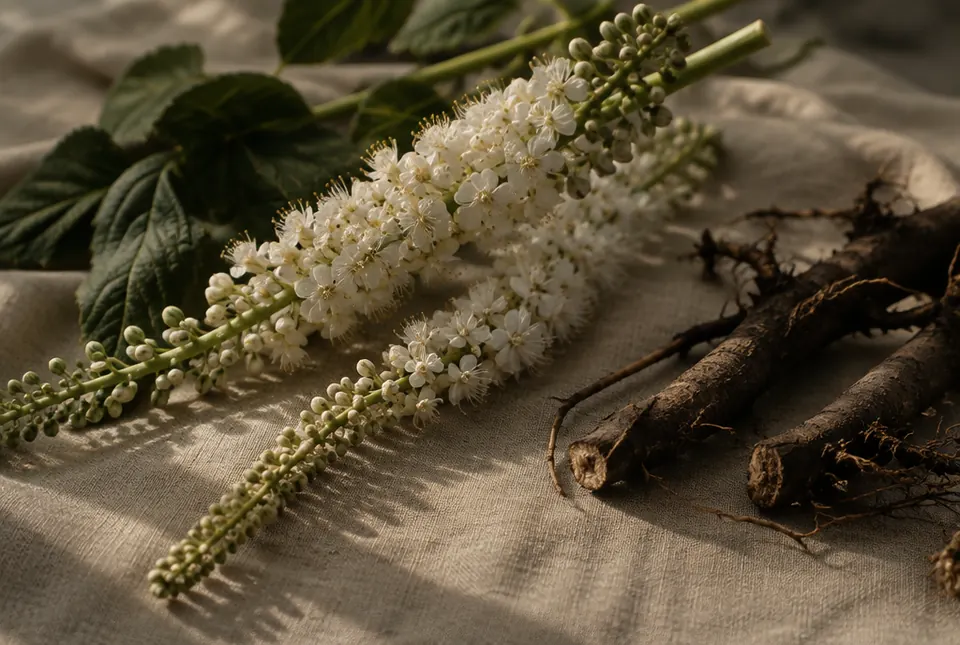
Black cohosh (Actaea racemosa, formerly Cimicifuga racemosa) is a tall flowering plant that grows in the woodlands of eastern North America. It is the root and rhizome, the underground stem, that is dried and used. Native American communities used it long before it arrived in European herbal practice, and today it is one of the most familiar herbs on menopause shelves.
In supplements you will usually see it listed as black cohosh root extract, sometimes standardised to triterpene glycosides, the group of compounds researchers have focused on. It appears on its own in capsules and tablets, and alongside other botanicals such as red clover, sage or soy isoflavones in blends designed for women in midlife.
Black cohosh is traditionally used to support women through the menopause. Researchers have studied it in a number of trials, and a 2023 review of 22 studies noted possible benefits for overall menopause symptoms, though results across the wider research have been mixed. It is worth knowing that black cohosh is a different plant from blue cohosh, which has a separate and less reassuring safety profile.