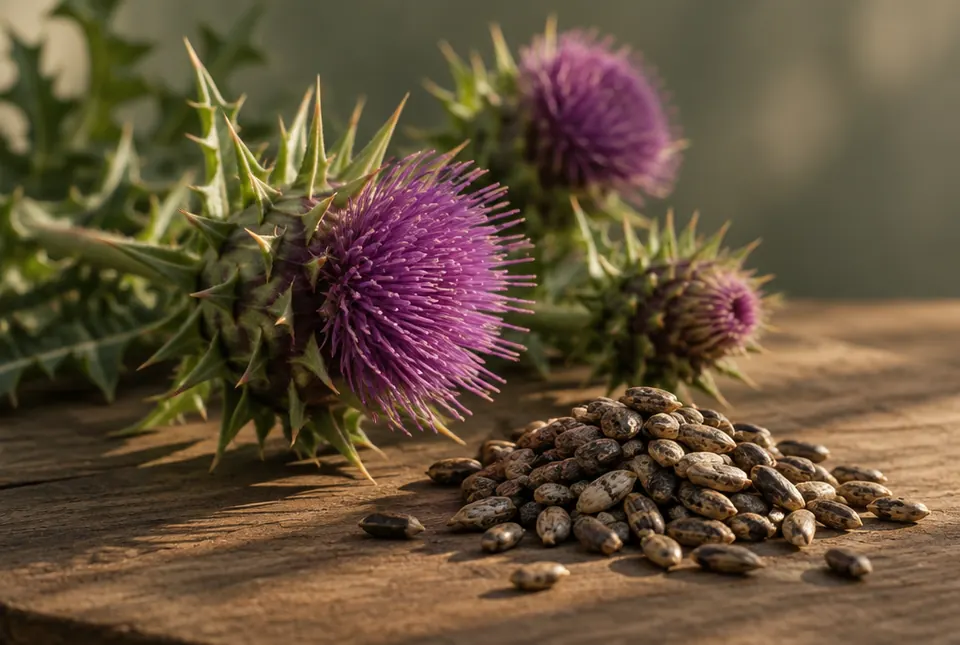
Milk thistle, Silybum marianum, is a tall, spiny plant with purple flower heads and glossy leaves marked with white veins. It is native to the Mediterranean and now grows wild in many parts of the world, including the UK. Legend links the white markings to drops of the Virgin Mary's milk, which is where the name comes from.
It has been used in European herbal tradition for over two thousand years and is traditionally used to support liver function. The seeds contain silymarin, a group of compounds that includes silybin, the main one researchers study. Milk thistle has been widely researched, but results in people are mixed and it has no authorised health claim.
On labels you will see milk thistle, Silybum marianum seed extract or silymarin, usually with a percentage such as 80% silymarin. That figure is more useful than the total extract weight. Some products bind silybin to phosphatidylcholine, a form designed to help absorption.