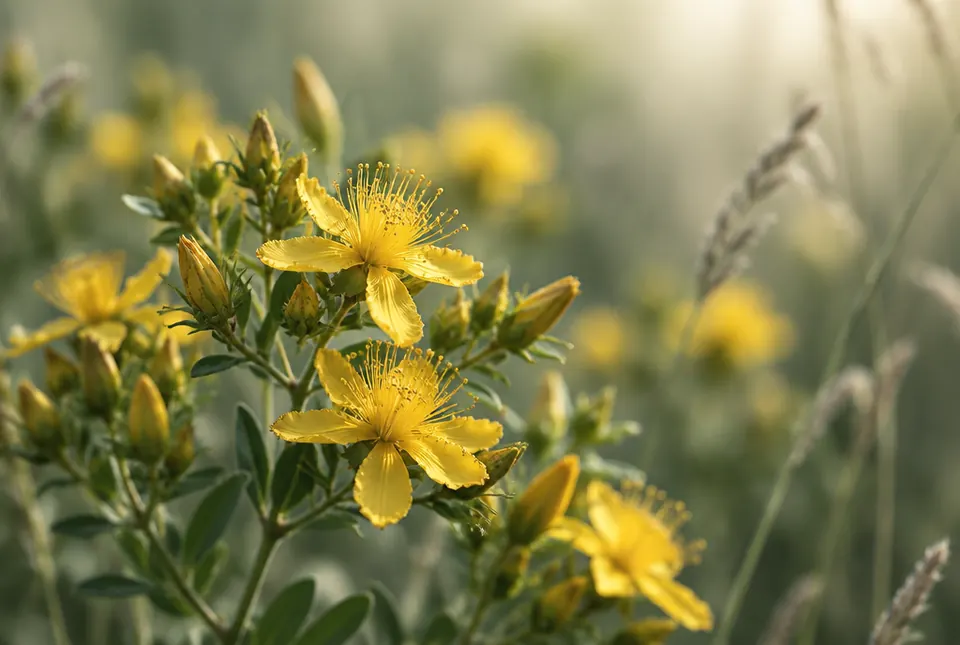
St John's wort, Hypericum perforatum, is a wild plant with bright yellow, star-shaped flowers that grows across Europe, including the UK, along roadsides and in meadows. It traditionally flowers around midsummer and St John's Day on 24 June, which is how it got its name. Hold a leaf to the light and you will see tiny translucent dots, which is what perforatum refers to.
It has been part of European herbal tradition for centuries and is traditionally used to support mood. Its compounds of interest include hypericin and hyperforin. It is also one of the herbs most known for interacting with medicines, because it speeds up the way the liver and gut clear many drugs, which can make them less effective. In the UK, it is one of the few herbs where the medicines regulator has issued specific interaction warnings.
On labels you will see St John's wort, Hypericum perforatum herb extract, or extracts standardised to hypericin. As a food supplement ingredient it has no authorised health claim.