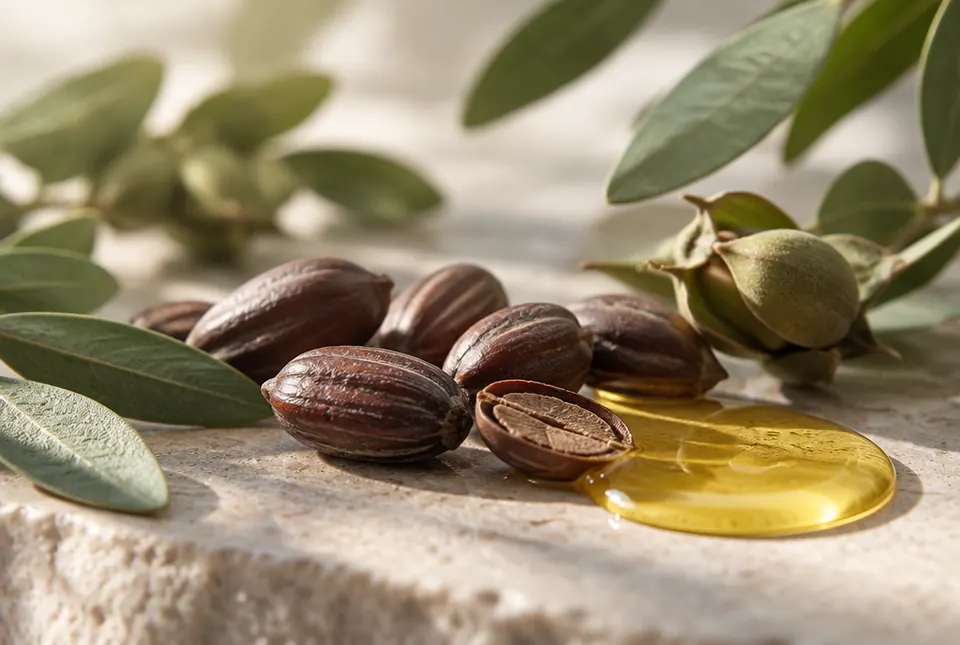
Jojoba (Simmondsia chinensis, pronounced ho-HO-ba) is a hardy, grey-green shrub native to the deserts of the south-western United States and northern Mexico. Its seeds are cold-pressed to produce a golden liquid that is usually called an oil but is actually a liquid wax, making up roughly half the weight of the seed. Jojoba is the only plant known to produce liquid wax in this way.
Around 98% of jojoba oil is made up of wax esters, with small amounts of free fatty acids, fatty alcohols, sterols and vitamin E. What makes it so popular in hair and skin care is that these wax esters closely resemble the wax esters in human sebum, the skin's own oil. On ingredient lists you will see Simmondsia chinensis seed oil, and it is a favourite carrier oil for blending essential oils such as rosemary.
Jojoba oil conditions hair and skin without feeling greasy. Studies describe it as a light, lubricating emollient that softens the skin surface and helps reduce water loss without blocking the skin, and research shows it mainly stays in the outermost layers of the skin. It has been used in cosmetics since the 1970s, when it became a replacement for sperm whale oil.