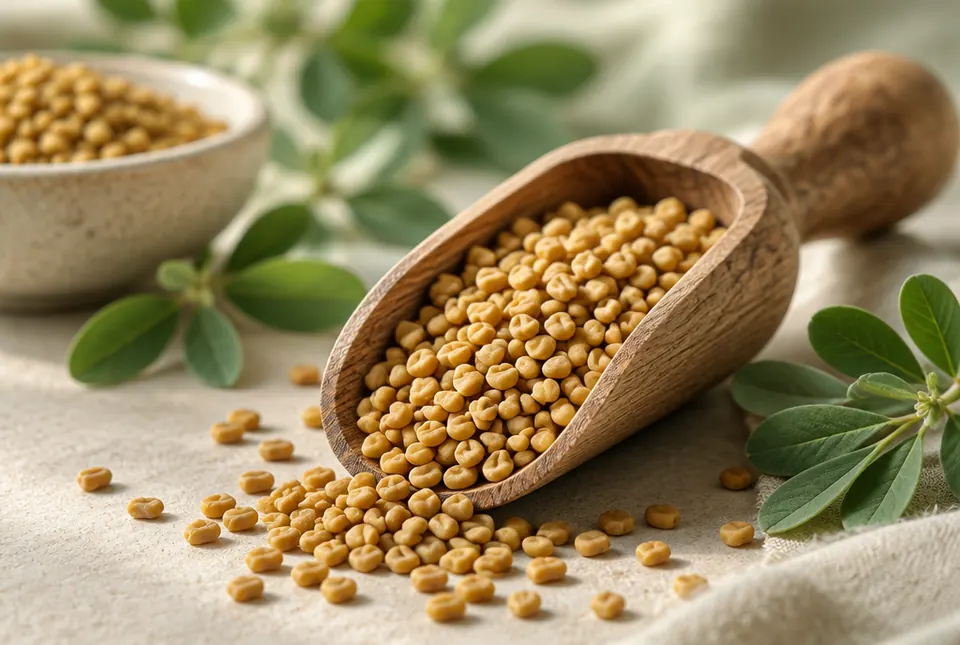
Fenugreek, Trigonella foenum-graecum, is a small annual plant in the pea family, grown across India, the Middle East, North Africa and the Mediterranean. Its hard, golden-brown seeds have a distinctive maple-like aroma, and its leaves are eaten as a herb, known in Indian cooking as methi.
The seeds are a staple spice in curries, spice blends and breads, and fenugreek has a long history in Ayurvedic, Middle Eastern and traditional Chinese practice. It is traditionally used to support normal blood sugar and male vitality. The seeds are rich in soluble fibre and contain compounds of interest such as the amino acid 4-hydroxyisoleucine and saponins called furostanols. Researchers have studied fenugreek in a range of small trials, but many were not high quality and it has no authorised health claim.
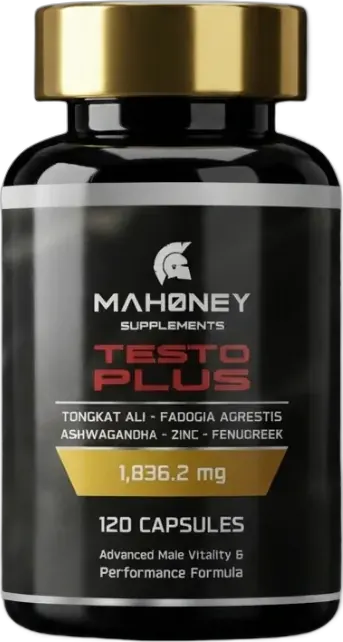
On labels you will see fenugreek seed powder, Trigonella foenum-graecum seed extract, or branded extracts standardised to saponins or 4-hydroxyisoleucine. Seed powder and concentrated extracts are quite different, so check which one a product uses.