Free UK delivery over £200
Nutra Formulations
Herbs and botanicals

Berberine

A yellow plant compound from barberry and goldenseal roots.

Why it’s used: Studied for its role in normal glucose and fat metabolism.

Shop 1 product with berberine
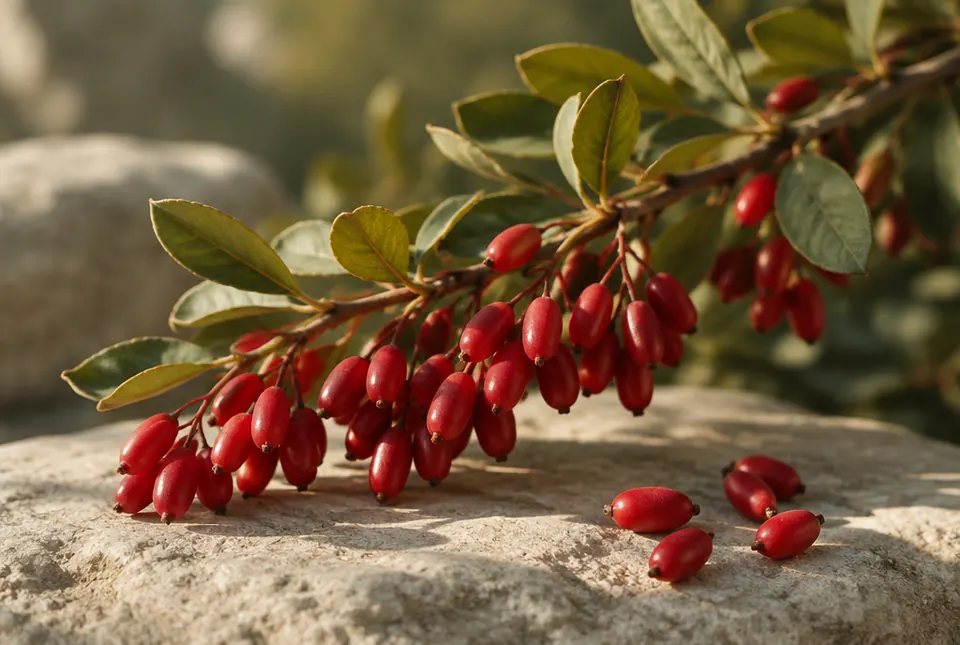
barberry branch with red berries
About

What is berberine?

Berberine is a bright yellow plant compound, an alkaloid, found in the roots, stems and bark of several plants, including barberry, goldenseal, Oregon grape, Chinese goldthread and phellodendron. Its strong colour meant it was once used as a natural dye for wool and leather.

Plants containing berberine have a long history in traditional Chinese and Ayurvedic practice. Today it is one of the most researched plant compounds sold as a supplement, and researchers have studied it for its role in normal glucose and fat metabolism. Many trials have been small or short, and berberine has no authorised health claim in the UK.

On labels you will see berberine HCl (hydrochloride), the most common form, or plant sources such as Berberis aristata extract or barberry root extract, sometimes standardised to a percentage of berberine. Because berberine is not well absorbed and is cleared quickly, it is usually taken two or three times a day with meals rather than in one go.

What the research says

Evidence, not anecdote.

3 findings behind this ingredient. Hover a card for the detail and the source.

Systematic review2023

An umbrella review found berberine significantly affected blood glucose, insulin resistance and blood lipids compared with controls.

This review graded 11 meta-analyses of randomised controlled trials. Berberine improved glucose, insulin resistance, lipids and body measures; constipation and diarrhoea were common side effects.

Meta-analysis2025

Compared with placebo, berberine lowered triglycerides, fasting glucose, waist size and LDL cholesterol in people with metabolic syndrome components.

A meta-analysis of randomised placebo-controlled trials found berberine reduced triglycerides, fasting glucose, waist circumference, LDL and total cholesterol, with safety similar to placebo.

Meta-analysis2021

In adults with type 2 diabetes, berberine alone or with standard care improved HbA1c, fasting glucose and blood lipids.

A meta-analysis of 46 randomised controlled trials found berberine reduced HbA1c (-0.73), fasting and after-meal glucose, insulin resistance and triglycerides, and raised HDL cholesterol.

In our range

Supplements with berberine.

Questions

Asked before you buy.

Can't see yours? Ask our team, answered within a working day.

Can I take berberine with diabetes medicine?

Only after speaking to your GP or pharmacist. Berberine may add to the effect of glucose-lowering medicines, raising the chance of low blood sugar. It should never replace prescribed treatment, and your medicines may need monitoring if you take both.

Why is berberine taken two or three times a day?

Berberine is poorly absorbed and cleared from the body fairly quickly. Splitting the daily amount into smaller doses with meals is how it has usually been used in research, and taking it with food may also reduce stomach upset.

What are the side effects of berberine?

The most common side effects are digestive, such as nausea, diarrhoea, constipation and bloating. Starting with a lower amount and taking it with food can help. It also interacts with several medicines, so check with a pharmacist if you take any.

Shop by goal
Often found with
Sources
  1. Berberine (LiverTox) · NCBI Bookshelf, NIH, 2024
  2. In the News: Berberine · NCCIH, 2024
  3. Effects of berberine on the blood concentration of cyclosporin A in renal transplanted recipients: clinical and pharmacokinetic study · PubMed, 2005

Information only, not medical advice. If you take medication, are pregnant or breastfeeding, speak to your GP or pharmacist first.

Find your protocol

Not sure where to start?

Six quick questions match you to the products in our range that fit your goal, with the reasons why.

Start the assessment