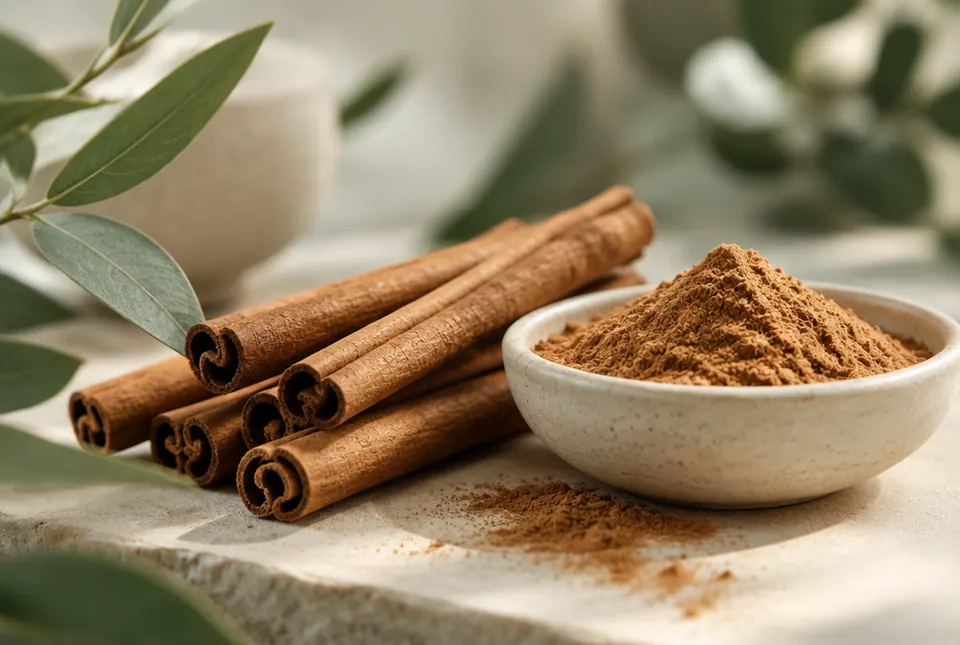
Cinnamon is the dried inner bark of trees in the Cinnamomum genus. Strips of bark are peeled away and dried, curling into the familiar quills or sticks. There are two main kinds: Ceylon cinnamon, Cinnamomum verum, from Sri Lanka, which is delicate and sweet, and cassia cinnamon, Cinnamomum cassia, from China and South-East Asia, which is stronger, darker and most common in UK supermarkets.
Cinnamon has been prized as a spice for thousands of years and is traditionally used to support normal blood sugar and digestion. Researchers have studied cinnamon in a number of trials looking at blood sugar, with mixed results, and it has no authorised health claim.
The type matters. Cassia naturally contains much more coumarin, a compound that can affect the liver in people who are sensitive to it, than Ceylon cinnamon does. On labels you will see cinnamon bark powder, cinnamon extract, Cinnamomum cassia, Cinnamomum verum or Ceylon cinnamon. Water-based extracts and Ceylon cinnamon generally contain less coumarin.