Free US delivery over $250
Nutra Formulations
Amino acids

L-Tryptophan

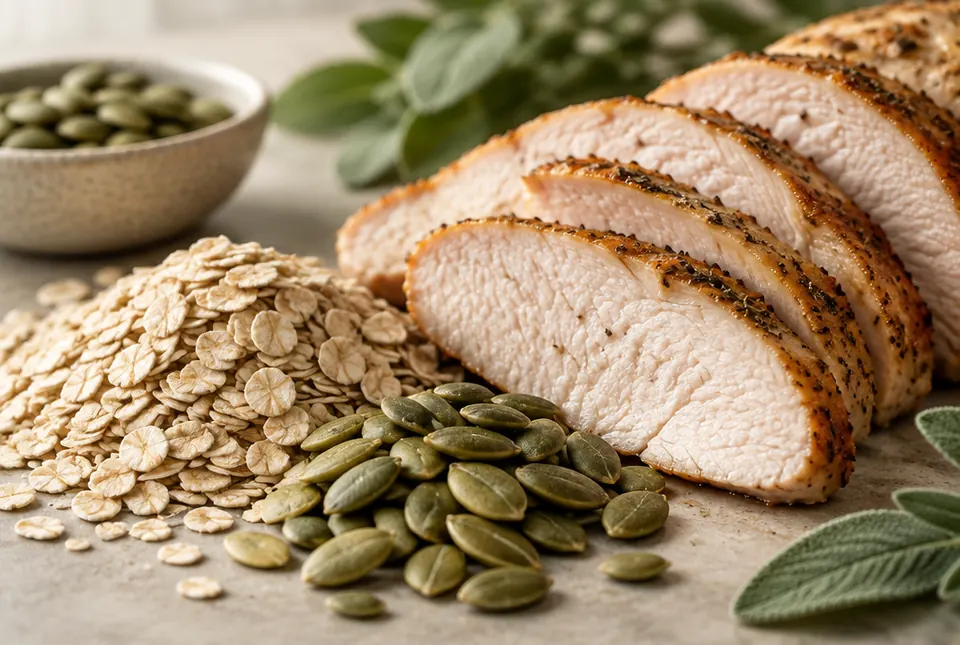
An essential amino acid found in turkey, oats and seeds.

Why it’s used: The body uses it to make serotonin and melatonin.

Shop 1 product with l-tryptophan
roasted turkey slices, oats and pumpkin seeds
About

What is l-tryptophan?

L-tryptophan is an essential amino acid, which means the body cannot make it and it must come from food. It is found in protein-rich foods such as turkey, chicken, milk, cheese, oats, nuts and seeds, and most people get enough from a normal, varied diet.

The body uses tryptophan to make serotonin, a chemical messenger in the brain and gut, and melatonin, the hormone involved in the sleep-wake cycle. It can also be converted into niacin (vitamin B3). Researchers have studied tryptophan in relation to mood and sleep, but no health claims are authorised for it in the UK.

Tryptophan also has an important history. In 1989, an outbreak of a serious illness called eosinophilia-myalgia syndrome in the United States was linked to L-tryptophan supplements, and products were recalled. Investigators from the CDC and FDA later found contaminants in the batches linked to cases. This is why manufacturing quality and purity testing matter so much for tryptophan products. On labels it appears as L-tryptophan, with amounts in milligrams (mg).

What the research says

Evidence, not anecdote.

3 findings behind this ingredient. Hover a card for the detail and the source.

Meta-analysis2022

L-tryptophan supplements shortened time spent awake after first falling asleep, especially at doses of 1 g or more.

Systematic review of 18 articles with a meta-analysis and meta-regression of 4. Tryptophan shortened wake after sleep onset, with a greater effect at 1 g a day or more; other sleep measures were unchanged.

Systematic review2021

L-tryptophan intake was linked to less anxiety and more positive mood in healthy adults in several randomised trials.

Systematic review of 11 randomised controlled trials in healthy adults. Four showed significant effects on negative and happy feelings versus control, with doses of 0.14–3 g a day; no effect was seen on aggressive feelings.

RCT1989

L-tryptophan reduced the time healthy adults took to fall asleep during the day compared with placebo.

Randomised double-blind study in 10 healthy volunteers given placebo, 1.2 g or 2.4 g L-tryptophan on separate days. Both doses shortened sleep latency at 1 hour, and the 2.4 g dose also at 2 hours.

In our range

Supplements with l-tryptophan.

Questions

Asked before you buy.

Can't see yours? Ask our team, answered within a working day.

What does L-tryptophan do?

L-tryptophan is an essential amino acid that the body uses to make serotonin, melatonin and niacin. It comes from foods such as turkey, milk, oats and seeds. Researchers have studied it in relation to mood and sleep, but there are no authorised health claims.

Can I take tryptophan with antidepressants?

Not without your doctor's advice. Tryptophan is a building block for serotonin, and combining it with SSRIs, SNRIs, MAOIs or other serotonergic medicines can cause serotonin syndrome, a potentially serious reaction. Speak to your GP or pharmacist first.

Is L-tryptophan safe after the 1989 outbreak?

The 1989 eosinophilia-myalgia syndrome outbreak in the US was linked to L-tryptophan, and investigators found contaminants in the batches linked to cases. Choosing products made to good manufacturing standards with purity testing matters, and anyone with severe muscle pain or rash should seek medical advice.

Shop by goal
Often found with
Sources
  1. Analysis of L-Tryptophan for the Etiology of Eosinophilia-Myalgia Syndrome (MMWR) · Centers for Disease Control and Prevention, 1990
  2. Serotonin Syndrome: Pathophysiology, Clinical Features, Management, and Potential Future Directions · International Journal of Tryptophan Research (PubMed Central), 2019
  3. Niacin: fact sheet for consumers · NIH Office of Dietary Supplements, 2021

Information only, not medical advice. If you take medication, are pregnant or breastfeeding, speak to your GP or pharmacist first.

Find your protocol

Not sure where to start?

Six quick questions match you to the products in our range that fit your goal, with the reasons why.

Start the assessment