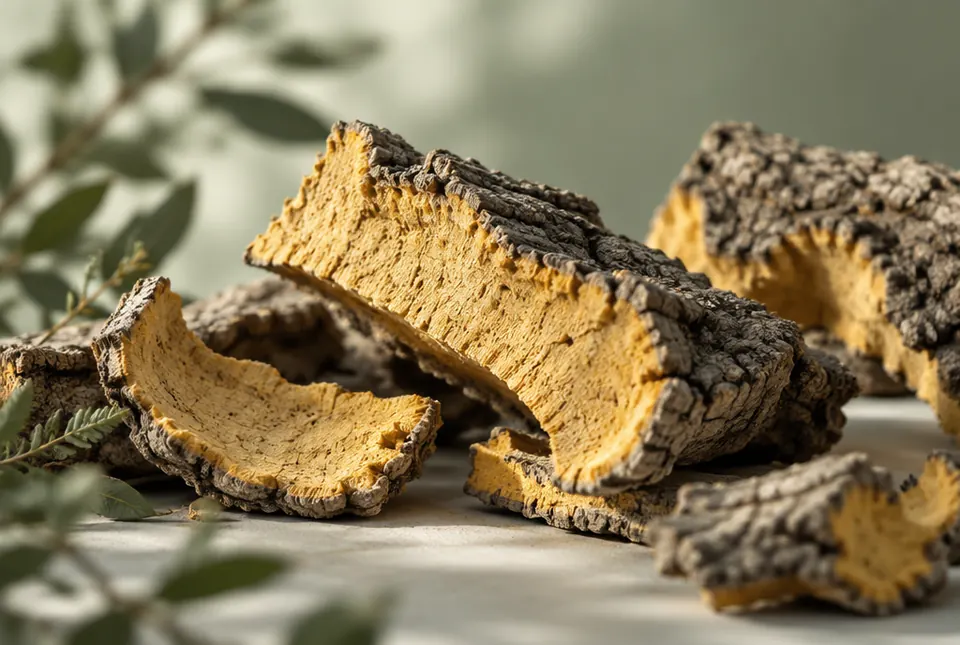
Phellodendron bark comes from Phellodendron amurense, the Amur cork tree, which is native to north-east China, Korea, Japan and eastern Russia. The tree has thick, corky outer bark, but it is the bright yellow inner bark that is harvested and dried. In traditional Chinese practice it is known as huang bai.
It has a long history in traditional Chinese practice and is traditionally used, often with magnolia bark, to support a calm mood. That yellow colour comes from alkaloids including berberine, the same compound found in barberry and goldenseal. Researchers have studied a branded combination of phellodendron and magnolia bark in small, short trials looking at stress and mood, with some encouraging but limited findings. Phellodendron has no authorised health claim.
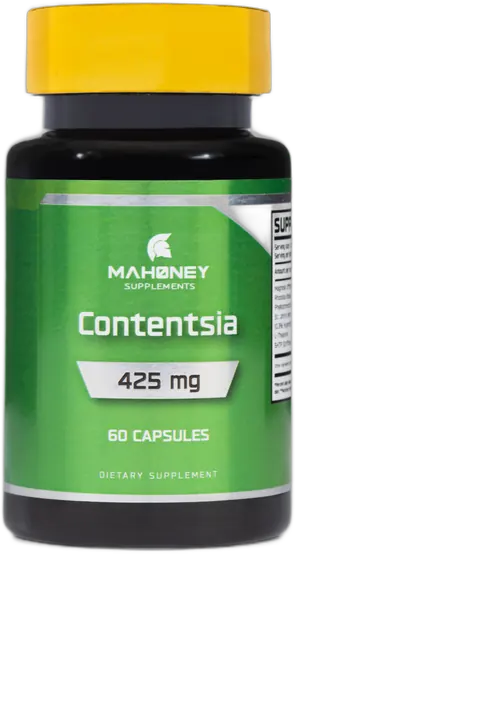
On labels you will see phellodendron bark extract, Phellodendron amurense bark extract or Amur cork tree, and it most often appears in a blend with magnolia bark. Because it naturally contains berberine, the same cautions that apply to berberine are worth bearing in mind.