Free US delivery over $250
Nutra Formulations
Herbs and botanicals

Phellodendron bark

Bark of the Amur cork tree, used in traditional Chinese practice.

Why it’s used: Traditionally used, often with magnolia, to support a calm mood.

Shop 1 product with phellodendron bark
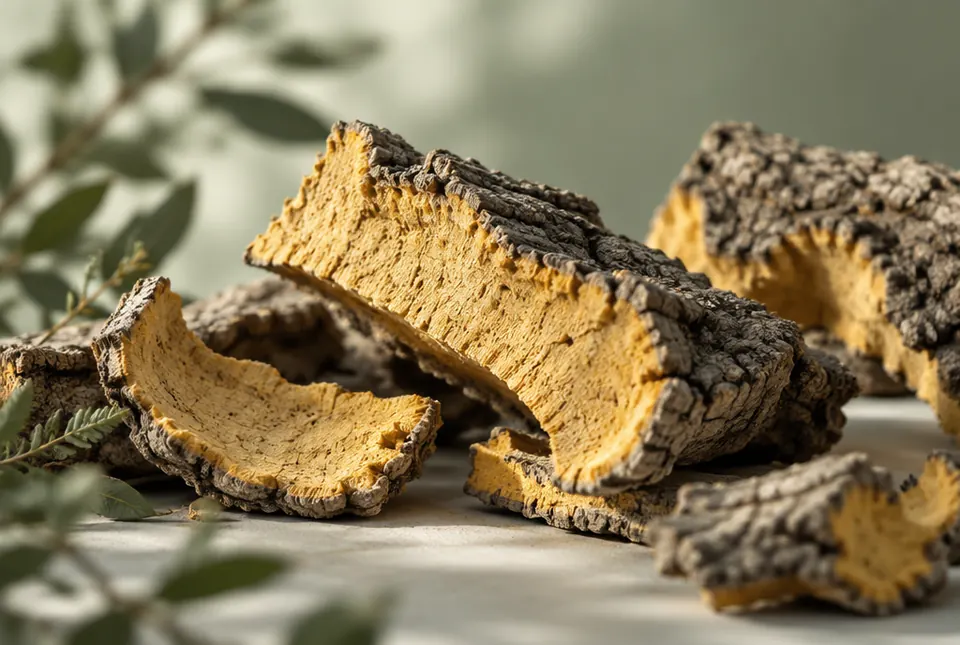
yellow-inside cork tree bark pieces
About

What is phellodendron bark?

Phellodendron bark comes from Phellodendron amurense, the Amur cork tree, which is native to north-east China, Korea, Japan and eastern Russia. The tree has thick, corky outer bark, but it is the bright yellow inner bark that is harvested and dried. In traditional Chinese practice it is known as huang bai.

It has a long history in traditional Chinese practice and is traditionally used, often with magnolia bark, to support a calm mood. That yellow colour comes from alkaloids including berberine, the same compound found in barberry and goldenseal. Researchers have studied a branded combination of phellodendron and magnolia bark in small, short trials looking at stress and mood, with some encouraging but limited findings. Phellodendron has no authorised health claim.

On labels you will see phellodendron bark extract, Phellodendron amurense bark extract or Amur cork tree, and it most often appears in a blend with magnolia bark. Because it naturally contains berberine, the same cautions that apply to berberine are worth bearing in mind.

What the research says

Evidence, not anecdote.

2 findings behind this ingredient. Hover a card for the detail and the source.

Clinical study2013

A magnolia and phellodendron bark blend lowered cortisol and improved mood in moderately stressed adults.

Placebo-controlled trial in 56 moderately stressed adults taking Relora for four weeks. Salivary cortisol was 18% lower than placebo, with lower stress, tension and fatigue scores; effects reflect the combination, not phellodendron alone.

RCT2008

A magnolia and phellodendron blend eased short-term anxiety in premenopausal women compared with placebo.

Six-week, double-blind, placebo-controlled pilot in 40 women taking 250 mg Relora three times daily. Temporary (state) anxiety fell versus placebo, but long-standing anxiety, cortisol and sleep did not change.

In our range

Supplements with phellodendron bark.

Questions

Asked before you buy.

Can't see yours? Ask our team, answered within a working day.

Does phellodendron contain berberine?

Yes. Phellodendron bark naturally contains berberine, which gives the inner bark its yellow colour. That is why berberine's cautions, such as avoiding it in pregnancy and checking for medicine interactions, also apply to phellodendron.

Why is phellodendron paired with magnolia?

The two barks are combined in traditional Chinese practice and in a branded blend studied in small trials on stress and mood. Findings come from the combination, so they do not tell us how either bark performs alone.

Is phellodendron safe in pregnancy?

It is best avoided. Phellodendron contains berberine, and NCCIH advises that berberine should not be used during pregnancy or breastfeeding. It should never be given to newborns, as berberine can worsen jaundice in babies.

Shop by goal
Often found with
Sources
  1. In the News: Berberine · NCCIH, 2024
  2. Effect of a proprietary Magnolia and Phellodendron extract on stress levels in healthy women: a pilot, double-blind, placebo-controlled clinical trial · Nutrition Journal (PubMed Central), 2008
  3. Effect of Magnolia officinalis and Phellodendron amurense (Relora®) on cortisol and psychological mood state in moderately stressed subjects · Journal of the International Society of Sports Nutrition, 2013

Information only, not medical advice. If you take medication, are pregnant or breastfeeding, speak to your GP or pharmacist first.

Find your protocol

Not sure where to start?

Six quick questions match you to the products in our range that fit your goal, with the reasons why.

Start the assessment