Free US delivery over $250
Nutra Formulations
Vitamins

Vitamin E

A fat-soluble antioxidant vitamin found in nuts, seeds and plant oils.

Why it’s used: Contributes to the protection of cells from oxidative stress.

Shop 1 product with vitamin e
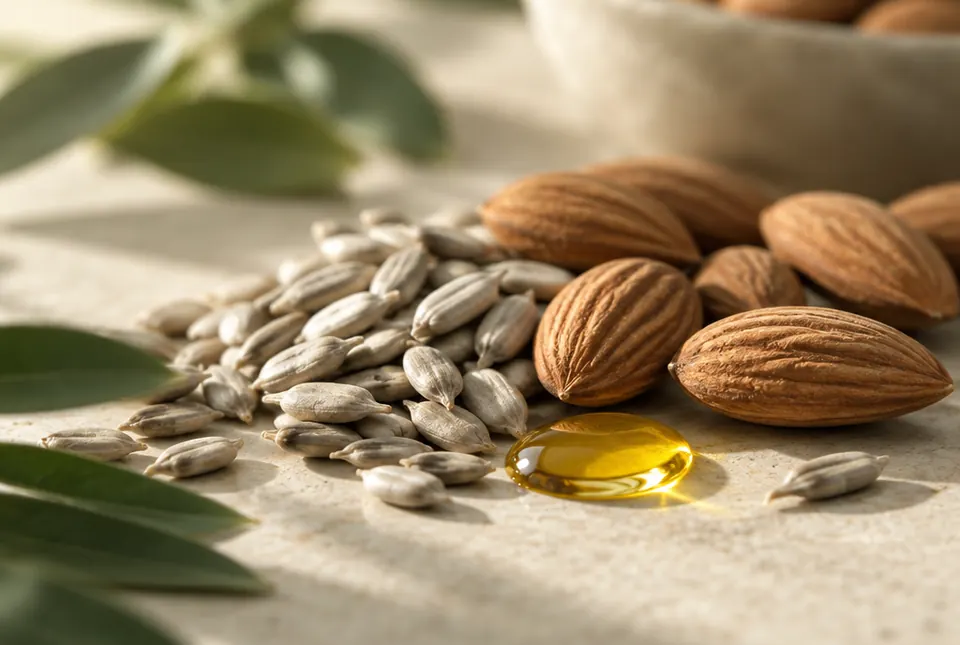
sunflower seeds and almonds with a drop of golden oil
About

What is vitamin e?

Vitamin E is a fat-soluble antioxidant vitamin. The richest sources are plant oils such as rapeseed, sunflower, soya, corn and olive oil, along with nuts, seeds and wheatgerm. Wheatgerm is found in cereals and cereal products, which also contribute. Any vitamin E your body does not need straight away is stored for future use, so you do not need it in your diet every day.

Vitamin E contributes to the protection of cells from oxidative stress. This is the authorised description of its role, and it is why vitamin E often appears in antioxidant blends alongside vitamin C and selenium.

Vitamin E is a family of related compounds, and labels can look confusing. Natural vitamin E is usually written as d-alpha-tocopherol, while synthetic vitamin E is dl-alpha-tocopherol. You may also see esters such as tocopheryl acetate or tocopheryl succinate, or mixed tocopherols. Amounts are given in milligrams (mg) or international units (IU), and natural and synthetic IU are not equivalent, so the milligram figure is the easiest way to compare products.

What the research says

Evidence, not anecdote.

3 findings behind this ingredient. Hover a card for the detail and the source.

Meta-analysis2021

Vitamin E lowered markers of oxidative stress and inflammation compared with control in adults receiving haemodialysis.

Systematic review and meta-analysis of 11 randomised controlled trials with 491 adults on haemodialysis. Vitamin E significantly reduced malondialdehyde, CRP and vascular adhesion molecules versus control, but not IL-6.

Meta-analysis2021

Vitamin E supplementation significantly lowered malondialdehyde, a marker of oxidative damage to fats, in adults on haemodialysis.

Systematic review and meta-analysis of 18 comparisons from vitamin E studies in adults on haemodialysis. Malondialdehyde was significantly lower after vitamin E, though results varied widely between studies.

RCT2001

Vitamin E (200 mg daily) lowered a blood marker of fat oxidation by 17% over a year in men with raised cholesterol.

Double-masked placebo-controlled randomised trial; 100 men with mildly raised cholesterol were measured at entry and after 12 months on 200 mg vitamin E, 500 mg vitamin C, both, or placebo. Vitamin E lowered plasma F2-isoprostanes by 17.3% versus placebo; vitamin C had no effect.

In our range

Supplements with vitamin e.

Questions

Asked before you buy.

Can't see yours? Ask our team, answered within a working day.

What does vitamin E do?

Vitamin E contributes to the protection of cells from oxidative stress. It is a fat-soluble antioxidant found mainly in plant oils, nuts, seeds and wheatgerm, and most people get the 3 to 4mg a day they need from a varied diet.

Is natural vitamin E different from synthetic?

They are measured differently. The NIH notes that 1,000mg of vitamin E equals 1,500 IU of natural vitamin E (d-alpha-tocopherol) or 1,100 IU of synthetic vitamin E (dl-alpha-tocopherol). Comparing the milligram figure on labels is the simplest way to see what you are getting.

Can vitamin E thin the blood?

High-dose vitamin E supplements may reduce the blood's ability to clot and increase the risk of bleeding. This matters most if you take warfarin or other anticoagulant or antiplatelet medicines, so talk to your GP or pharmacist before combining them.

Shop by goal
Often found with
Sources
  1. Vitamin E: vitamins and minerals · NHS, 2020
  2. Vitamin E: fact sheet for consumers · NIH Office of Dietary Supplements, 2021

Information only, not medical advice. If you take medication, are pregnant or breastfeeding, speak to your GP or pharmacist first.

Find your protocol

Not sure where to start?

Six quick questions match you to the products in our range that fit your goal, with the reasons why.

Start the assessment