Free US delivery over $250
Nutra Formulations
Herbs and botanicals

Lemon balm

A lemon-scented herb from the mint family.

Why it’s used: Traditionally used to support relaxation and restful sleep.

Shop 1 product with lemon balm
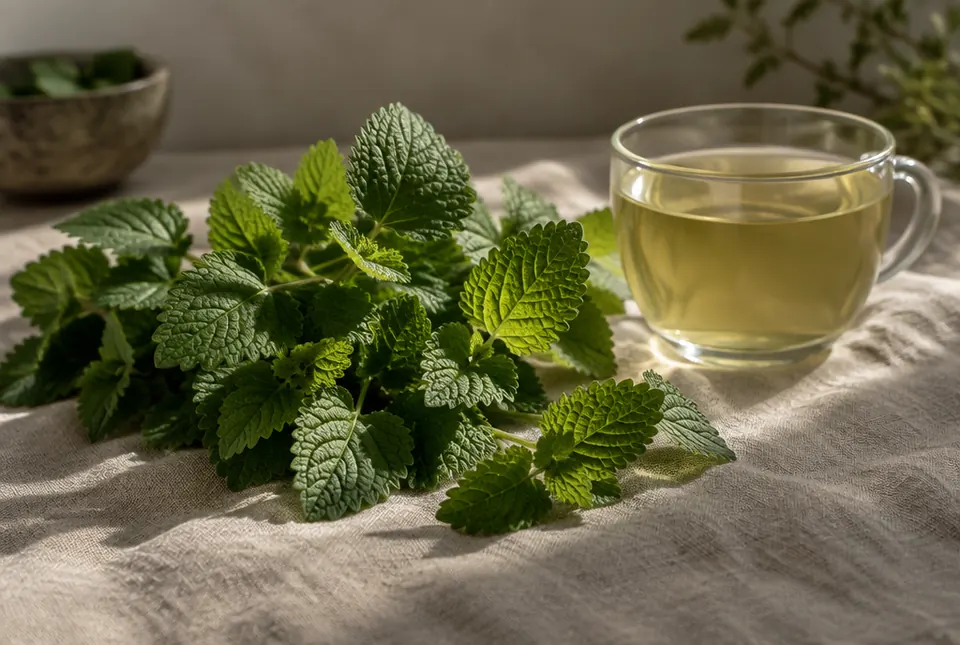
lemon balm leaves and infusion
About

What is lemon balm?

Lemon balm, Melissa officinalis, is a bushy perennial herb in the mint family with soft, crinkled leaves that smell strongly of lemon when crushed. It is native to southern Europe and the Mediterranean but grows happily in British gardens, where it is popular with bees. The name Melissa comes from the Greek word for honeybee.

For centuries it has been brewed as a tea and used in European herbal tradition, where it is traditionally used to support relaxation and restful sleep. The European Medicines Agency recognises the traditional use of lemon balm leaf for mild symptoms of stress, to aid sleep and for mild digestive complaints. As a food supplement ingredient, it has no authorised health claim.

In food, the fresh leaves are used in salads, drinks and desserts. On supplement labels you will see lemon balm, Melissa officinalis leaf or leaf extract, sometimes with an extract ratio such as 4:1. It is often combined with other calming herbs such as hops, valerian or chamomile.

What the research says

Evidence, not anecdote.

3 findings behind this ingredient. Hover a card for the detail and the source.

Meta-analysis2021

Lemon balm improved anxiety and depression scores compared with placebo in clinical trials, without serious side effects.

A meta-analysis of randomised clinical trials found significant improvements in anxiety and depressive symptoms, particularly in acute use; heterogeneity between studies was high.

RCT2023

A lemon balm extract improved mood, stress, anxiety and wellbeing scores in stressed adults or poor sleepers versus placebo.

100 healthy adults with moderate emotional distress or poor sleep took 400 mg/day lemon balm extract (Relissa) or placebo for 3 weeks. All main scores improved and it was well tolerated.

RCT2024

A lemon balm phytosome extract lowered insomnia scores and improved reported sleep quality compared with placebo.

In a double-blind crossover study, insomnia severity scores fell by 2.9 points more than placebo, and 87% reported better sleep versus 30% on placebo.

In our range

Supplements with lemon balm.

Questions

Asked before you buy.

Can't see yours? Ask our team, answered within a working day.

Is lemon balm related to mint?

Yes. Lemon balm belongs to the mint family, Lamiaceae, which also includes peppermint, sage and thyme. It has the square stems typical of the family but a distinct lemon scent, and it spreads readily in gardens.

Does lemon balm make you drowsy?

It can. The European Medicines Agency notes its traditional calming use, and some people feel drowsy after taking it. Avoid combining it with alcohol or sedating medicines, and see how it affects you before driving.

Can I drink lemon balm tea instead of taking a supplement?

Yes, lemon balm tea is a traditional way to enjoy it. A tea generally provides less of the herb than a concentrated extract, and amounts are harder to measure. Supplements offer a consistent, labelled amount.

Shop by goal
Often found with
Sources
  1. Assessment report on Melissa officinalis L., folium · European Medicines Agency, 2013
  2. Traditional Herbal Registrations granted, with indication and quantitative composition · MHRA, 2025
  3. Community herbal monograph on Melissa officinalis L., folium · European Medicines Agency, 2013

Information only, not medical advice. If you take medication, are pregnant or breastfeeding, speak to your GP or pharmacist first.

Find your protocol

Not sure where to start?

Six quick questions match you to the products in our range that fit your goal, with the reasons why.

Start the assessment