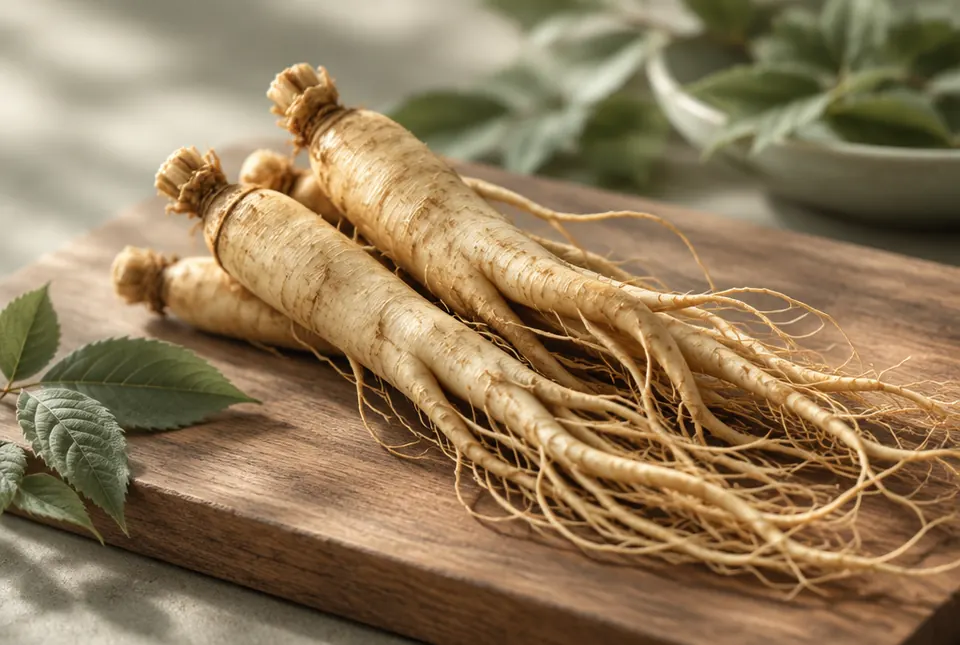
Korean ginseng is the root of Panax ginseng, a slow-growing plant native to the mountain forests of Korea, north-east China and eastern Russia. It is also called Asian ginseng. Roots are usually harvested after four to six years. White ginseng is simply dried, while red ginseng is steamed before drying, which gives it a darker colour.
In Korean and Chinese tradition the root has been used for centuries as a tonic, traditionally used to support energy, stamina and mental performance, especially in older age. Its main compounds of interest are ginsenosides, a group of plant saponins. Researchers have studied ginseng for mental performance, fatigue and blood sugar, but the results are mixed and NCCIH says there is not enough evidence to draw firm conclusions.
On labels you will see Panax ginseng root powder, Korean red ginseng or a standardised extract, often stated as a percentage of ginsenosides, such as 4%. Siberian ginseng (Eleutherococcus) and American ginseng (Panax quinquefolius) are different plants and are not interchangeable with Korean ginseng.