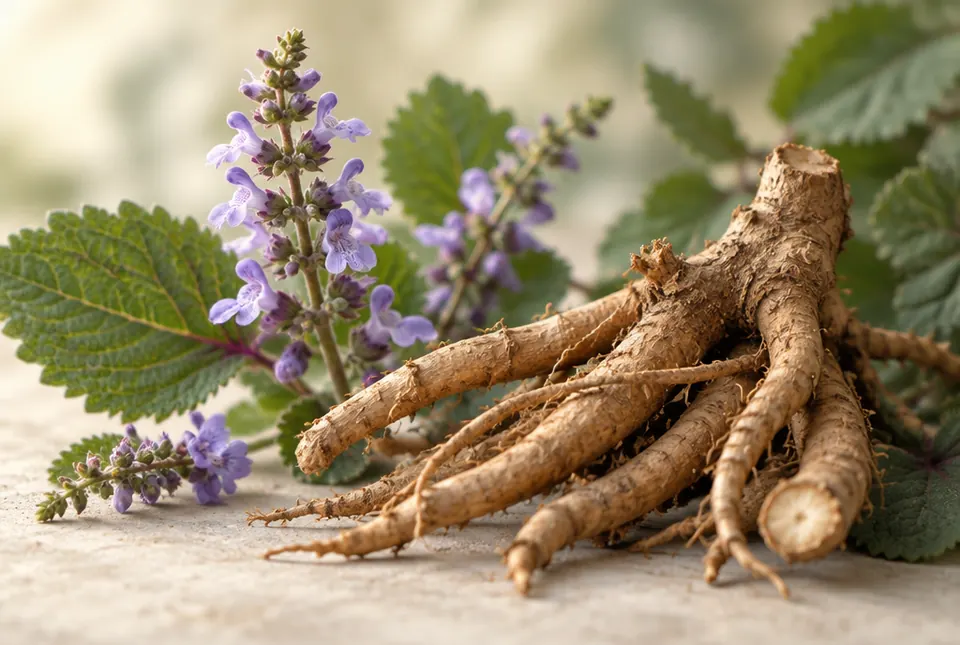
Coleus forskohlii, now also classified as Plectranthus barbatus, is a perennial plant of the mint family native to India, Nepal and Thailand. It is grown for its tuberous roots, which contain forskolin, a compound that has been widely studied in the laboratory for its effects on a cell-signalling messenger called cyclic AMP.
The root has been traditionally used in Ayurveda, and in parts of India it is also eaten as a pickle. Modern interest centres on body composition alongside exercise. The human evidence is small and mixed: a 2005 trial in 30 overweight men reported lower body fat compared with placebo over 12 weeks, while a similar trial in overweight women the same year found no significant change in fat mass.
On labels you will see Coleus forskohlii root extract, usually standardised to 10% or 20% forskolin. Mouse studies have found that whole root extracts can affect liver enzymes and liver fat, and researchers linked this to compounds other than forskolin itself. How this applies to people at supplement amounts is not known.