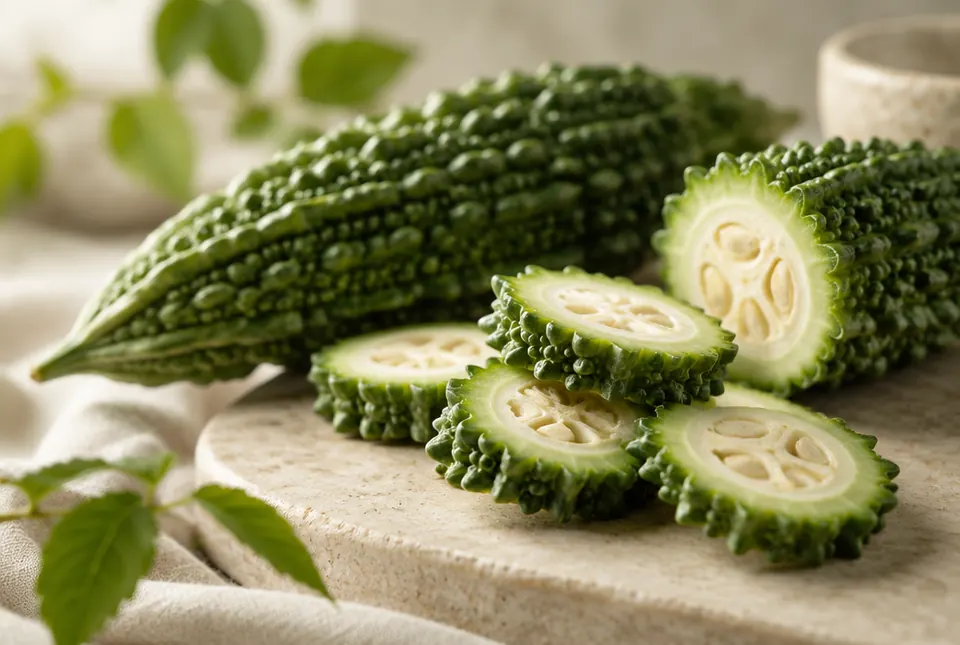
Bitter melon, Momordica charantia, is a tropical climbing vine whose knobbly green fruit looks like a warty cucumber. It is also known as bitter gourd or karela, and it is grown across India, China, South-East Asia, Africa and the Caribbean. As the name suggests, it is one of the most bitter vegetables eaten anywhere.
It is a common ingredient in Asian cooking, often stir-fried, stuffed or added to curries and soups, and it is traditionally used in Ayurvedic and Chinese practice to support normal blood sugar. Its compounds of interest include charantin, polypeptide-p and vicine. Researchers have studied bitter melon in small trials, but the evidence is limited and NCCIH says research has not shown it to be effective for diabetes. It has no authorised health claim.
On labels you will see bitter melon, bitter gourd, karela or Momordica charantia fruit extract, sometimes with an extract ratio. It is often combined with other traditional herbs such as gymnema, cinnamon or fenugreek.