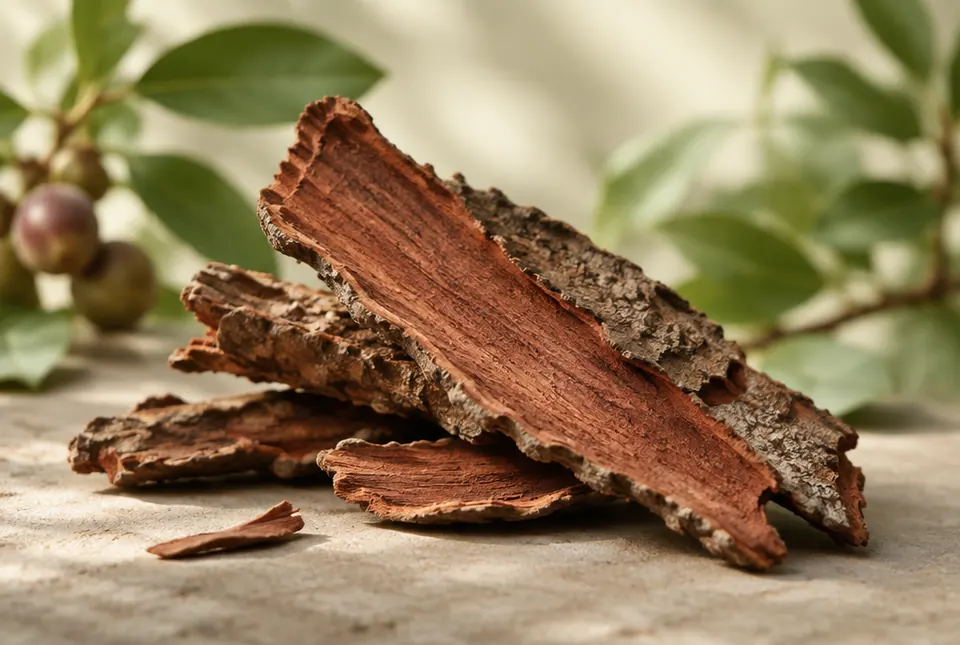
Pygeum comes from the bark of Prunus africana, the African cherry or African plum tree, a large evergreen that grows in mountain forests across sub-Saharan Africa and Madagascar. The tree belongs to the same family as cherries, plums and almonds, and the name pygeum comes from its former botanical name, Pygeum africanum.
The bark has long been used in African traditional practice and became popular in Europe in the twentieth century. It is traditionally used to support prostate and urinary comfort in men. Its compounds of interest include phytosterols, triterpenes and ferulic acid esters. Researchers have studied pygeum in small trials, and NCCIH describes limited evidence of possible benefit for some urinary symptoms. It has no authorised health claim.
Because demand for the bark has put pressure on wild trees, international trade in Prunus africana is controlled under CITES. On labels you will see pygeum, Pygeum africanum bark extract or Prunus africana bark extract, sometimes standardised to phytosterols. It is often combined with saw palmetto.