Free UK delivery over £200
Nutra Formulations
Herbs and botanicals

Pygeum (African plum)

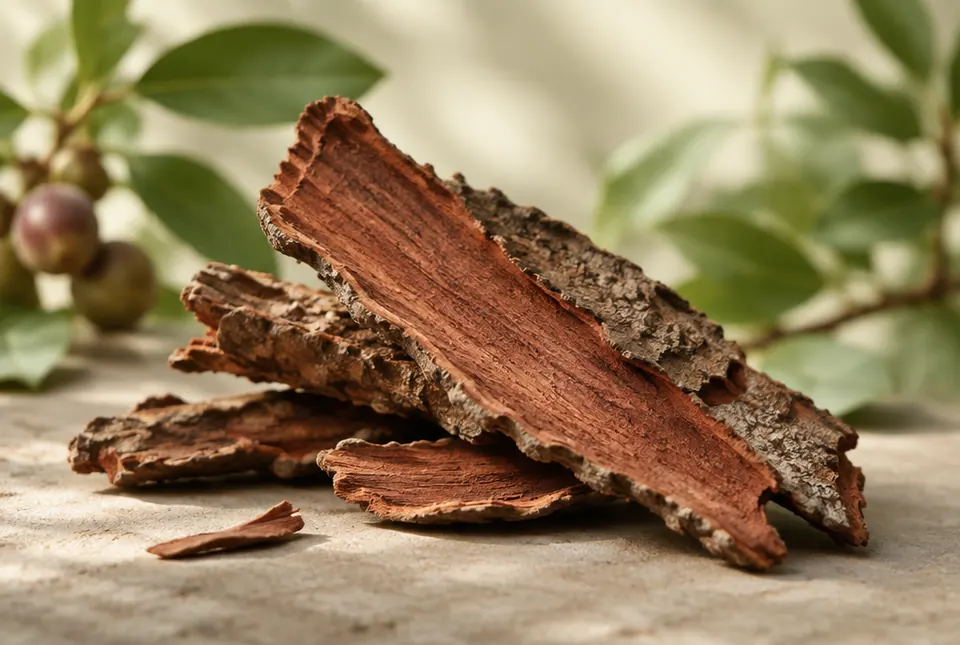
Bark of the African cherry tree.

Why it’s used: Traditionally used to support prostate and urinary comfort in men.

reddish African plum tree bark pieces
About

What is pygeum?

Pygeum comes from the bark of Prunus africana, the African cherry or African plum tree, a large evergreen that grows in mountain forests across sub-Saharan Africa and Madagascar. The tree belongs to the same family as cherries, plums and almonds, and the name pygeum comes from its former botanical name, Pygeum africanum.

The bark has long been used in African traditional practice and became popular in Europe in the twentieth century. It is traditionally used to support prostate and urinary comfort in men. Its compounds of interest include phytosterols, triterpenes and ferulic acid esters. Researchers have studied pygeum in small trials, and NCCIH describes limited evidence of possible benefit for some urinary symptoms. It has no authorised health claim.

Because demand for the bark has put pressure on wild trees, international trade in Prunus africana is controlled under CITES. On labels you will see pygeum, Pygeum africanum bark extract or Prunus africana bark extract, sometimes standardised to phytosterols. It is often combined with saw palmetto.

What the research says

Evidence, not anecdote.

3 findings behind this ingredient. Hover a card for the detail and the source.

Systematic review2002

Pygeum extracts moderately improved urinary symptoms and flow in men with benign prostatic hyperplasia.

Systematic review of 18 randomised trials with 1,562 men. Compared with placebo, men on pygeum were twice as likely to report symptom improvement, with 19% less night-time urination and 23% higher peak flow; trials were small and short.

RCT1990

Pygeum extract improved urination problems in men with an enlarged prostate significantly more than placebo.

Double-blind, placebo-controlled multicentre trial in 263 men taking 50 mg pygeum extract twice daily for 60 days. Urination improved in 66% on pygeum versus 31% on placebo.

Observational2022

Men taking pygeum for six months reported better urinary symptoms and quality of life in routine practice.

Cross-sectional study of 115 men with BPH-related urinary symptoms in Spain. After six months on pygeum, IPSS fell by an average 4.5 points and 60% had a clinically meaningful improvement, with no treatment-related side effects.

In our range

Supplements with pygeum.

None of our current products contain it. Find the right supplement for you in six questions.

Questions

Asked before you buy.

Can't see yours? Ask our team, answered within a working day.

What is pygeum made from?

Pygeum is made from the bark of the African cherry tree, Prunus africana, which grows in the mountain forests of Africa and Madagascar. The bark is dried and extracted to concentrate its plant sterols and other compounds.

Is pygeum sustainable?

International trade in Prunus africana is regulated under CITES because heavy harvesting has put pressure on wild trees. This does not mean every product is poorly sourced, but it is worth choosing suppliers who can show legal, responsible sourcing.

Is pygeum taken with saw palmetto?

Often, yes. Both are traditionally used to support prostate and urinary comfort in men, so they are commonly combined. Research has mostly looked at each one separately, so evidence for the combination itself is limited.

Shop by goal
Sources
  1. Benign Prostatic Hyperplasia and Complementary and Integrative Approaches: What the Science Says · NCCIH, 2023
  2. Prostate enlargement (Cochrane Complementary Medicine) · Cochrane Complementary Medicine, 2023
  3. CITES Checklist · CITES, 2025

Information only, not medical advice. If you take medication, are pregnant or breastfeeding, speak to your GP or pharmacist first.

Find your protocol

Not sure where to start?

Six quick questions match you to the products in our range that fit your goal, with the reasons why.

Start the assessment