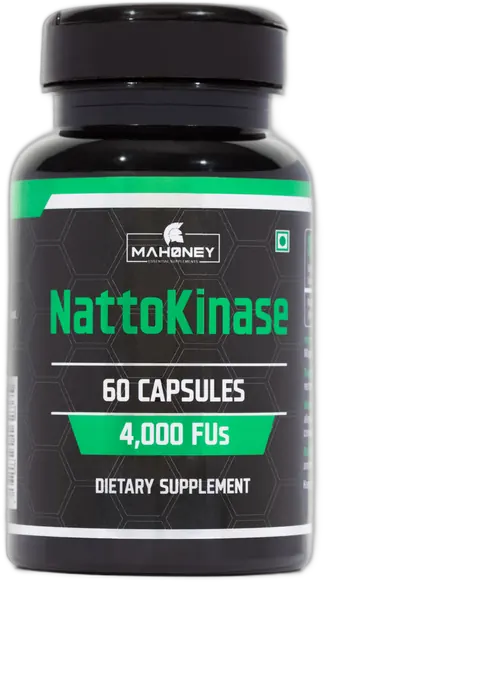
Nattokinase is an enzyme produced when soya beans are fermented with the bacterium Bacillus subtilis var. natto to make natto, a traditional Japanese food known for its strong smell and sticky, stringy texture. Natto has been eaten in Japan for centuries, and nattokinase was identified in it by Japanese researchers in the 1980s.
In the laboratory, nattokinase can break down fibrin, a protein involved in blood clotting, which is why researchers have studied it for its role in normal circulation. Small human studies have measured changes in clotting-related markers, but these studies have been small and short, and they make no promises about health outcomes.
Because it is an enzyme, nattokinase is measured by activity, in fibrinolytic units (FU), rather than just by weight; a 100 mg dose often supplies around 2,000 FU. Supplement nattokinase is extracted from fermented soya and is usually sold in capsules. Natto itself is rich in vitamin K, and some supplements may contain it depending on processing, which matters for anyone taking warfarin.