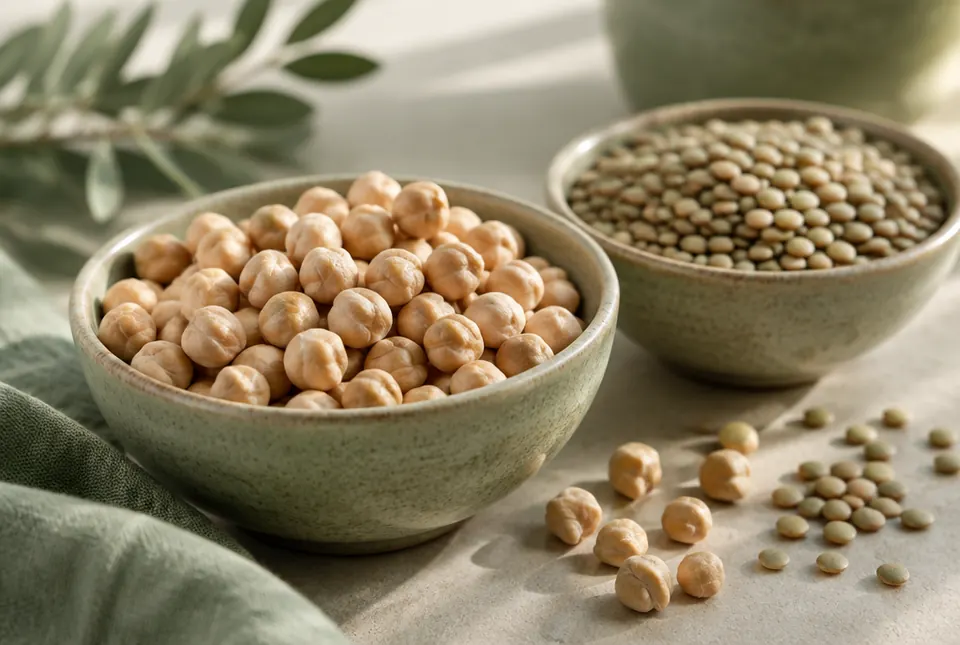
L-lysine is an essential amino acid, so the body cannot make it and it must come from food. Rich sources include meat, fish, dairy foods, eggs and legumes such as beans and lentils. Most people who eat a varied diet with enough protein get plenty.
Lysine is a building block for proteins throughout the body, including collagen, the most abundant protein in animals and a key structural protein in skin, tendons and bone. Because it is essential, a steady intake from protein foods matters, particularly for people whose diets are low in protein overall.
As a supplement, lysine is usually sold as L-lysine or L-lysine hydrochloride (HCl), in tablets, capsules or powder, with amounts in milligrams (mg). Researchers have studied it in a wide range of human trials, and a 2019 systematic review of 71 studies looked at amounts from under 20mg to 17.5g a day. The side effects reported were mainly stomach-related, such as nausea, stomach ache and diarrhoea. No health claims are authorised for lysine in the UK.