Free EU delivery over €200
Nutra Formulations
Herbs and botanicals

Celery seed

Seeds of the celery plant.

Why it’s used: Traditionally used to support joint comfort and uric acid balance.

Shop 1 product with celery seed
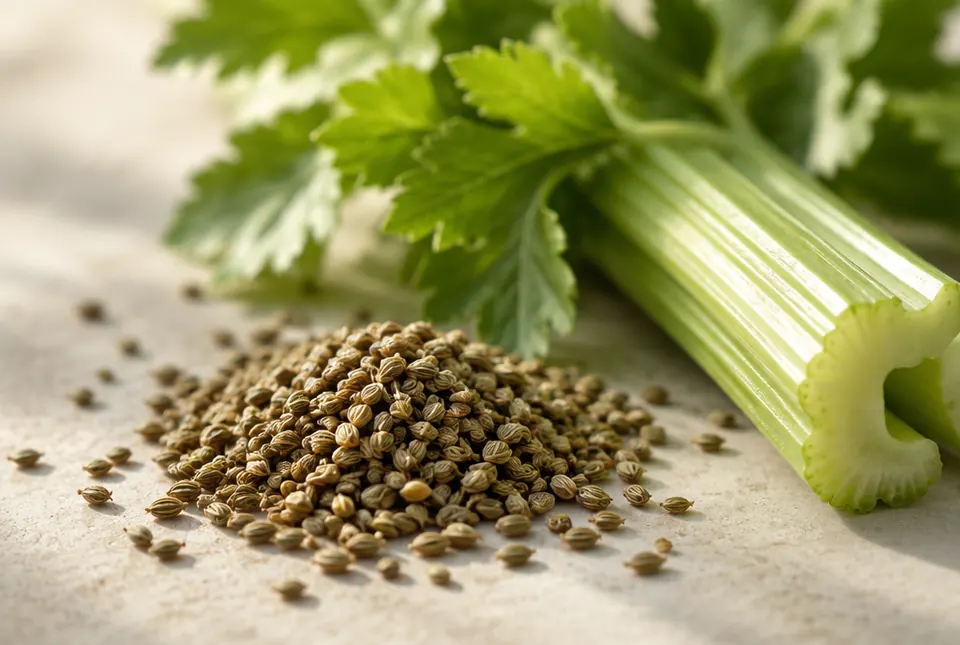
celery seeds beside a celery stalk
About

What is celery seed?

Celery seed comes from Apium graveolens, the same plant that gives us crunchy celery sticks. The tiny brown seeds are produced by the wild-type plant, and they have a warm, slightly bitter flavour that turns up in pickling spice, celery salt and coleslaw dressings. Seeds, stalks and oil are all part of normal diets around the world.

In herbal practice the seeds have a much longer story. Celery seed has been used in Ayurvedic, Chinese and European traditions, and it is traditionally used to support joint comfort and uric acid balance. In supplements you will usually see it listed as celery seed extract or Apium graveolens seed, in capsules or tablets, sometimes alongside tart cherry, which is often chosen for the same purpose.

Laboratory studies have explored antioxidant and anti-inflammatory activity in celery seed compounds, and researchers have suggested possible roles in joint and uric acid health, but good clinical trials in people are lacking. Celery is also one of the 14 major food allergens in the UK, so it is always highlighted on product labels.

What the research says

Evidence, not anecdote.

3 findings behind this ingredient. Hover a card for the detail and the source.

RCT2025

A Boswellia and celery seed extract combination reduced knee pain, stiffness and swelling compared with placebo in adults with knee osteoarthritis.

Randomised double-blind multicentre trial in 62 adults with knee osteoarthritis taking 300 mg Boswellia plus 250 mg celery seed extract or placebo for 90 days. The combination eased pain, stiffness and swelling and lowered cartilage breakdown markers, with no adverse effects; the study was funded by the product maker.

Preclinical2019

Celery seed extracts lowered blood uric acid in mice and reduced joint swelling in rats with induced gouty arthritis.

Animal study testing water and oil extracts of celery seed. In mice with induced high uric acid, both extracts lowered serum uric acid and xanthine oxidase, and in rats they reduced ankle swelling and inflammatory markers.

Preclinical2018

Celery (Apium graveolens) extract lowered raised blood uric acid in mice, in a dose-dependent way, by inhibiting xanthine oxidase.

Mouse study with induced high uric acid, given 250–1,000 mg/kg celery extract for two weeks. The highest dose brought serum uric acid back to near-normal (2.7 vs 4.6 mg/dL) and reduced liver xanthine oxidase activity.

In our range

Supplements with celery seed.

Questions

Asked before you buy.

Can't see yours? Ask our team, answered within a working day.

What is celery seed extract used for?

Celery seed is traditionally used to support joint comfort and uric acid balance. It is often paired with tart cherry in supplements. Laboratory research has explored its plant compounds, but clinical trials in people are still lacking.

Can I take celery seed if I am allergic to celery?

No. Celery is one of the 14 major allergens in UK food law, and reactions can range from skin rashes to anaphylaxis. If you have a celery allergy, or react strongly to birch pollen, avoid celery seed supplements.

Is celery seed safe in pregnancy?

No. Celery seed in supplement amounts is considered unsafe during pregnancy because it may stimulate the womb. Normal amounts of celery as a vegetable or spice in food are fine.

Shop by goal
Often found with
Sources
  1. Eating out or ordering food when you have an allergy · GOV.UK, 2026
  2. An Updated Phytopharmacological Review on Medicinal Plant of Arab Region: Apium graveolens Linn · Pharmacognosy Reviews (PubMed), 2017
  3. Effects of celery (Apium graveolens) on blood pressure, glycemic and lipid profile in adults: a systematic review and meta-analysis of randomized controlled trials · Frontiers in Nutrition (PubMed), 2025

Information only, not medical advice. If you take medication, are pregnant or breastfeeding, speak to your GP or pharmacist first.

Find your protocol

Not sure where to start?

Six quick questions match you to the products in our range that fit your goal, with the reasons why.

Start the assessment