Free UK delivery over £200
Nutra Formulations
Herbs and botanicals

Cranberry

Extract of the North American cranberry, rich in proanthocyanidins.

Why it’s used: Traditionally used to support urinary tract health.

Shop 1 product with cranberry
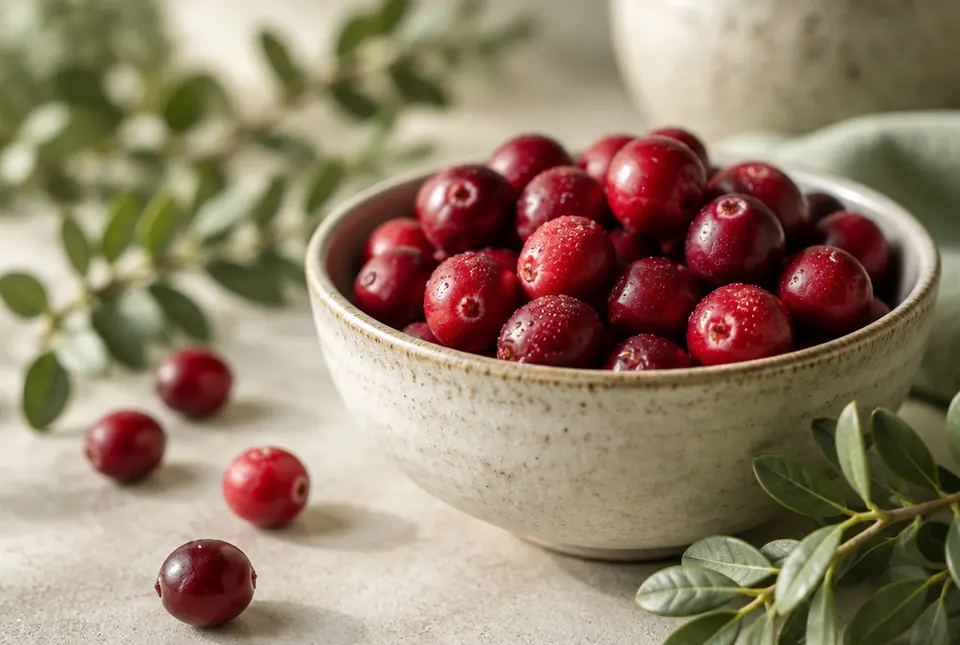
fresh red cranberries in a ceramic bowl
About

What is cranberry?

The American cranberry (Vaccinium macrocarpon) is a low, trailing shrub that grows in sandy bogs across North America. Its sharp red berries are harvested in autumn, often by flooding the bogs so the fruit floats to the surface. In the UK we know them best as cranberry sauce at Christmas and as juice, but cranberries have a long history in Native American food and traditional practice.

Cranberries are rich in proanthocyanidins, often shortened to PACs, a type of plant polyphenol. Researchers believe PACs may make it harder for certain bacteria to stick to the bladder wall. Cranberry is traditionally used to support urinary tract health, and on labels you will see cranberry extract, cranberry fruit powder or Vaccinium macrocarpon, sometimes with the PAC content stated.

A 2023 Cochrane review of the research found that cranberry products may reduce the risk of repeat symptomatic urinary infections in women who have had them before, although findings across studies have been inconsistent. Cranberry is not a substitute for seeing a GP if you think you have an infection. Processing into tablets and capsules can reduce PAC levels, so the form and quality of the product matter.

What the research says

Evidence, not anecdote.

3 findings behind this ingredient. Hover a card for the detail and the source.

Systematic review2023

Cranberry products lowered the risk of symptomatic urinary tract infections in women with recurrent infections, children and susceptible people.

Cochrane review of 50 trials (8,857 people); 26 trials were pooled. Cranberry cut the risk of culture-verified UTIs (RR 0.70), including in women with recurrent UTIs (RR 0.74), but showed little benefit in older care-home residents or pregnant women.

Meta-analysis2024

Cranberry products providing at least 36 mg proanthocyanidins a day lowered the risk of urinary tract infections by 18%.

Meta-analysis of 10 randomised trials. At 36 mg or more PACs a day, UTI risk fell 18% (RR 0.82); lower intakes showed no significant effect, and benefit was seen with 12 to 24 weeks of use.

Meta-analysis2017

Cranberry reduced the risk of repeat urinary tract infections by 26% in otherwise healthy women with a history of UTI.

Meta-analysis of 7 randomised trials in 1,498 generally healthy, non-pregnant women with previous UTIs. Cranberry lowered UTI recurrence versus placebo or control (pooled RR 0.74).

In our range

Supplements with cranberry.

Questions

Asked before you buy.

Can't see yours? Ask our team, answered within a working day.

Does cranberry work for urinary infections?

Cranberry is traditionally used to support urinary tract health. A 2023 Cochrane review found it may reduce the risk of repeat infections in some women, but it is not suitable for an infection you already have. If you have symptoms, see your GP or pharmacist.

What are PACs in cranberry?

PACs, or proanthocyanidins, are plant compounds found in cranberries. Researchers think they may stop some bacteria from sticking to the bladder wall. Processing can lower PAC levels, which is why some products list their PAC content.

Can I take cranberry with warfarin?

Check with your GP or pharmacist first. The evidence on whether cranberry affects warfarin is conflicting, and because warfarin needs careful monitoring, any regular cranberry supplement should be discussed with the person who manages your medication.

Shop by goal
Often found with
Sources
  1. Cranberry: Usefulness and Safety · National Center for Complementary and Integrative Health (NIH), 2023
  2. Cranberries for preventing urinary tract infections · Cochrane Database of Systematic Reviews, 2023
  3. Herb-Drug Interactions: What the Science Says · National Center for Complementary and Integrative Health (NIH), 2023

Information only, not medical advice. If you take medication, are pregnant or breastfeeding, speak to your GP or pharmacist first.

Find your protocol

Not sure where to start?

Six quick questions match you to the products in our range that fit your goal, with the reasons why.

Start the assessment