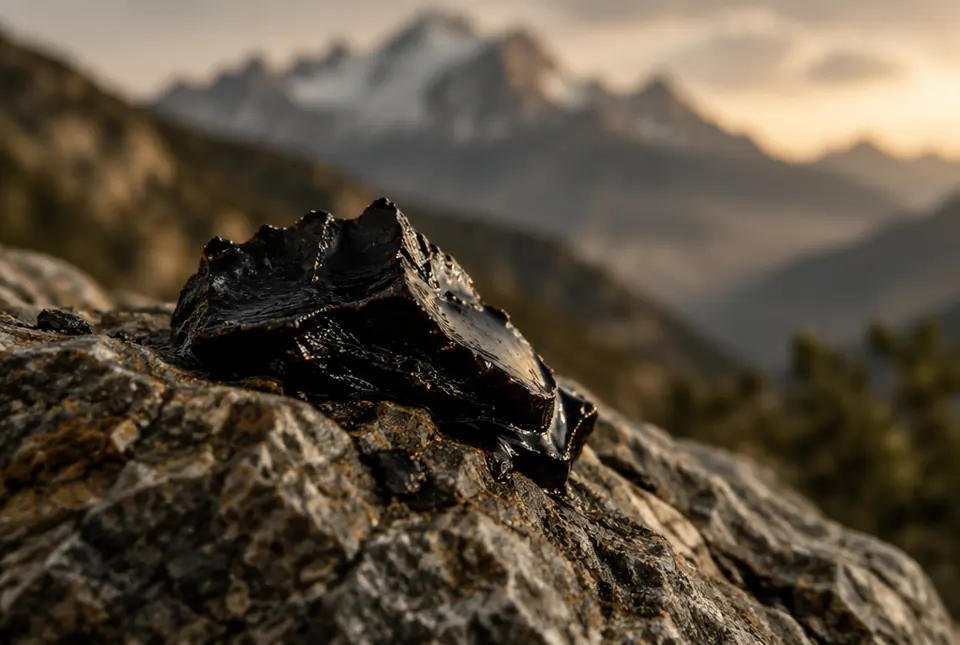
Shilajit is a sticky, tar-like resin that seeps from rock in high mountain ranges, especially the Himalayas and Altai. It forms over very long periods as plant material breaks down and is pressed between layers of rock. In Ayurveda it is classed as a rasayana, a rejuvenating substance, and is traditionally used to support vitality and energy.
Its make-up varies from region to region. Reviews describe it as rich in humic substances, especially fulvic acid, along with minerals, small amounts of amino acids and compounds called dibenzo-alpha-pyrones. Researchers have studied purified shilajit in small trials, including one in healthy middle-aged men, but the evidence base is still small and it has no authorised health claim.
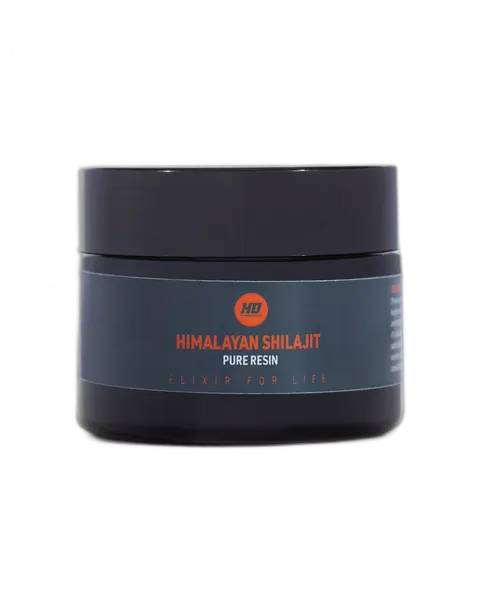
Raw shilajit must be purified before use, as unprocessed material can contain heavy metals and other contaminants. On labels you will see shilajit, purified shilajit, shilajit resin or extract, sometimes with a fulvic acid percentage. Capsules, powders and resin pots are all common.