Free UK delivery over £200
Nutra Formulations
Minerals

Potassium

An essential mineral found in bananas, potatoes and leafy greens.

Why it’s used: Contributes to normal muscle function and the maintenance of normal blood pressure.

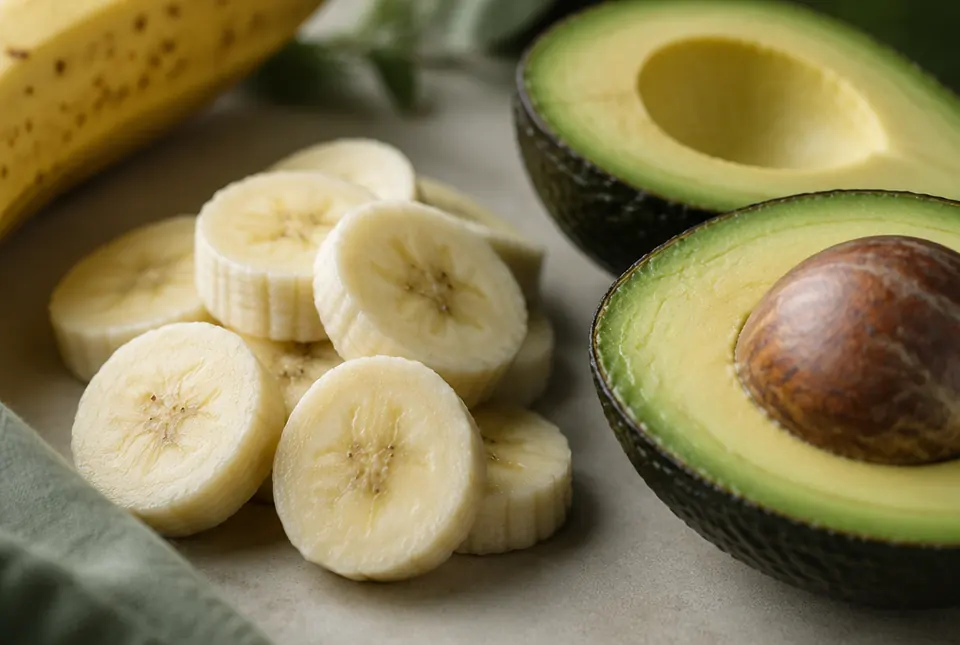
sliced bananas and avocado halves
About

What is potassium?

Potassium is an essential mineral that helps control the balance of fluids in the body and helps the heart muscle work properly. It is found in most types of food. Good sources include bananas, vegetables such as broccoli, parsnips and brussels sprouts, beans and pulses, nuts and seeds, fish, beef, chicken and turkey.

Potassium contributes to normal muscle function, normal functioning of the nervous system and the maintenance of normal blood pressure. Adults need much more potassium each day than most other minerals, and food is by far the main source.

In supplements, potassium often appears as potassium chloride or potassium citrate, and you may also see phosphate, aspartate, bicarbonate or gluconate. Research has not shown that any form is better than the others. According to the NIH, most supplements provide only small amounts, no more than 99mg per serving, so a supplement is a minor contributor compared with fruit, vegetables and pulses. Because some common medicines change how the body handles potassium, it is one of the minerals where checking with a pharmacist matters most.

What the research says

Evidence, not anecdote.

3 findings behind this ingredient. Hover a card for the detail and the source.

Meta-analysis2013

Higher potassium intake lowered blood pressure in adults with high blood pressure, with no harm to kidney function or blood fats.

22 randomised trials (1,606 participants) and 11 cohort studies were analysed. Systolic pressure fell by 3.49 mmHg; higher intake was linked to 24% lower stroke risk.

Meta-analysis1997

Potassium supplements significantly lowered systolic and diastolic blood pressure across 33 randomised controlled trials.

33 trials with 2,609 participants were pooled. Systolic pressure fell by 3.11 mmHg and diastolic by 1.97 mmHg, with larger effects in people eating more salt.

Meta-analysis2017

In people with high blood pressure, potassium supplements lowered systolic and diastolic blood pressure.

A meta-analysis of randomised trials of at least 4 weeks found reductions of 4.48 mmHg systolic and 2.96 mmHg diastolic, greatest in people with high salt and low potassium intakes.

In our range

Supplements with potassium.

None of our current products contain it. Find the right supplement for you in six questions.

Questions

Asked before you buy.

Can't see yours? Ask our team, answered within a working day.

How much potassium do I need a day?

Adults aged 19 to 64 need 3,500mg of potassium a day, and most people can get this from food. Bananas, vegetables, beans, pulses, nuts, seeds, fish and meat are all good sources.

Can potassium supplements be dangerous?

They can be for some people. People with kidney disease, and those taking ACE inhibitors, angiotensin receptor blockers or potassium-sparing diuretics, can develop high blood potassium. The NHS advises older people not to take potassium supplements unless a doctor recommends them.

Does potassium help blood pressure?

Potassium contributes to the maintenance of normal blood pressure, which is its authorised role. If you have high blood pressure or take medicine for it, speak to your GP before taking potassium, because some blood pressure medicines raise potassium levels.

Independent experts

Experts on potassium.

Videos from doctors, research scientists and registered dietitians, for general education. They are independent of Nutra Formulations, do not refer to our products and are not medical advice for you.

Is Potassium Good for High Blood Pressure? Benefits of Potassium

Dr John, MD, internal and geriatric medicine · Think Your Health on YouTube

Sources
  1. Others: vitamins and minerals · NHS, 2020
  2. Potassium: fact sheet for consumers · NIH Office of Dietary Supplements, 2021

Information only, not medical advice. If you take medication, are pregnant or breastfeeding, speak to your GP or pharmacist first.

Find your protocol

Not sure where to start?

Answer six quick questions and we will point you to the protocol or product that fits your goal. No email needed.

Start the assessment