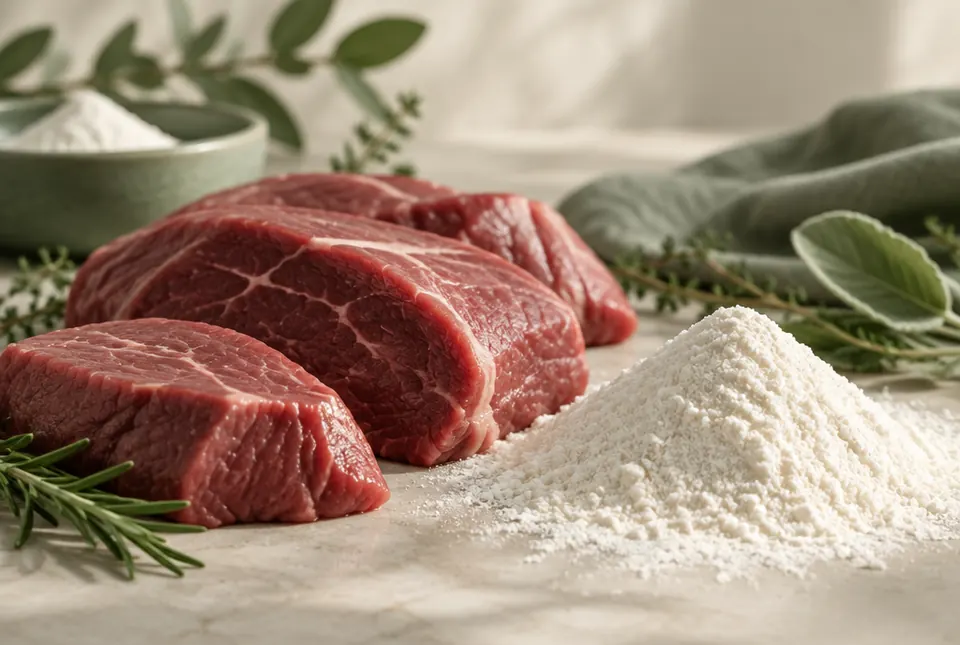
L-carnosine is a dipeptide, a small molecule made of two amino acids joined together: beta-alanine and histidine. It is concentrated in skeletal muscle and is also found in the brain and other excitable tissues. The body makes its own carnosine, and the main dietary sources are meat and fish, with beef a particularly rich source. Plants contain none.
In muscle, carnosine acts as a buffer, helping to manage the acid that builds up during intense exercise. In laboratory studies it also binds metals and shows antioxidant properties, which is why researchers are interested in it. These describe how carnosine behaves in the body; they are not authorised health claims.
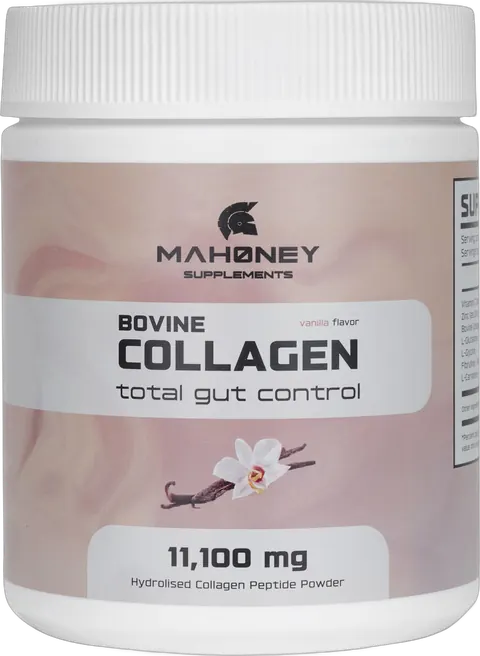
When you swallow carnosine, an enzyme in the blood called serum carnosinase breaks much of it down into beta-alanine and histidine. Muscle then uses beta-alanine to rebuild carnosine, which is why some sports products use beta-alanine instead. On labels it appears as L-carnosine, with amounts listed in milligrams (mg).