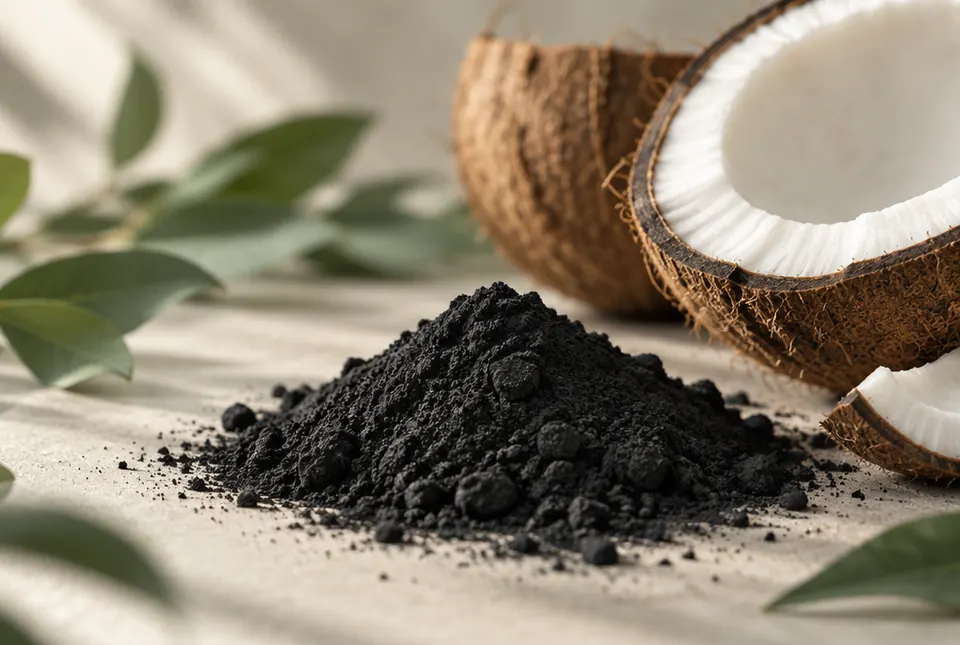
Activated charcoal is a very fine, black carbon powder. It is made by heating carbon-rich material, often coconut shells, to high temperatures and then exposing it to steam or gas. This activation process creates a vast network of tiny pores, giving each gram an enormous surface area.
That surface is what makes it useful. Activated charcoal works by adsorption, meaning gases and other substances stick to its surface as it passes through the gut, rather than being absorbed into it. It is not absorbed by the body and leaves in the stool. In hospitals, a medicinal form is used in some cases of poisoning, which is a very different use from a food supplement.
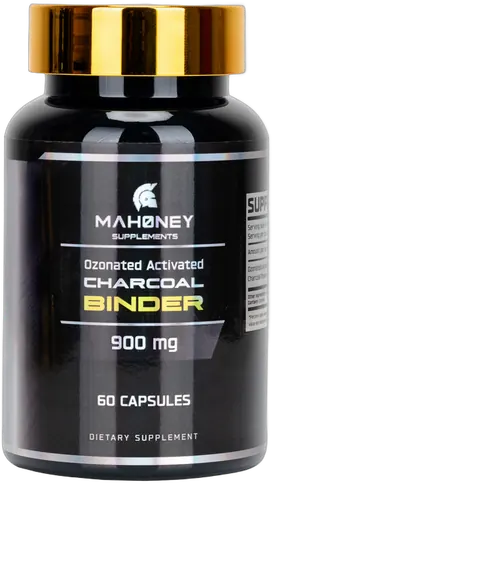
As a food supplement it is sold in capsules and tablets. It carries one authorised health claim: activated charcoal contributes to reducing excessive flatulence after eating, with the effect obtained from 1 g taken at least 30 minutes before and 1 g shortly after a meal. Coconut shell is a popular source, and you may see it labelled as activated carbon.