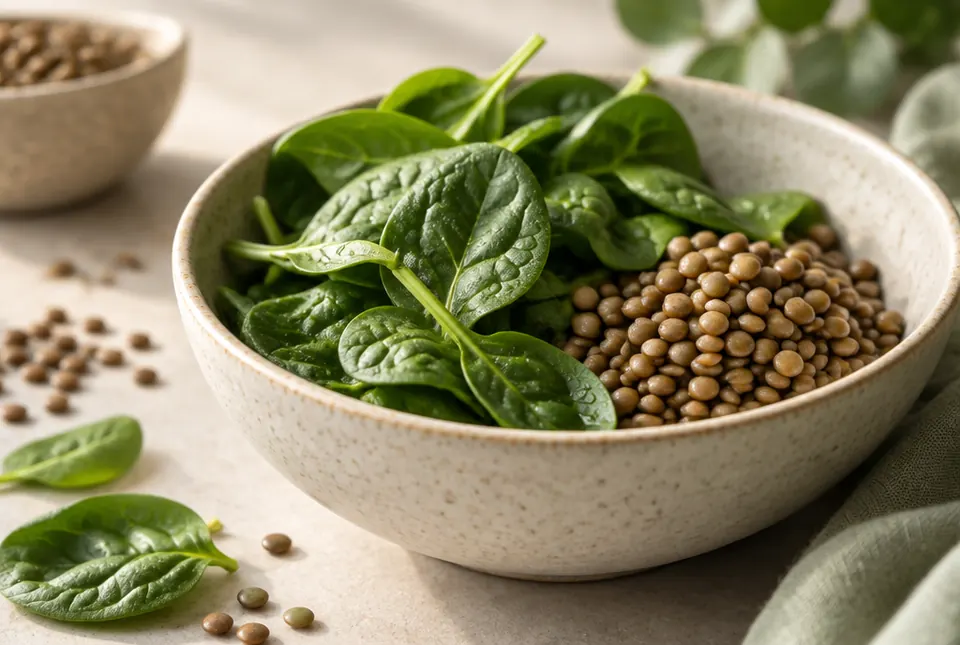
Folate, also known as vitamin B9, is a B vitamin found in small amounts in many foods. Good sources include broccoli, brussels sprouts, leafy greens such as cabbage, kale, spring greens and spinach, peas, chickpeas and kidney beans. Folic acid is the manmade form, used in supplements and in fortified foods such as breakfast cereals.
Folate helps the body form healthy red blood cells. It contributes to normal blood formation and to the reduction of tiredness and fatigue. There are no long-term stores in the body, so you need to eat folate-containing foods often.
On labels you will usually see folic acid. Some products use methylfolate, also written as 5-MTHF, which some people with a common gene variant called MTHFR C677T may be able to use more easily. For anyone who could become pregnant, UK advice is specific: take a 400 microgram folic acid supplement every day before conception and until 12 weeks of pregnancy. The NIH notes that this advice is for folic acid itself rather than methylfolate, even for people with the gene variant.