Free US delivery over $250
Nutra Formulations
Amino acids

L-Methionine

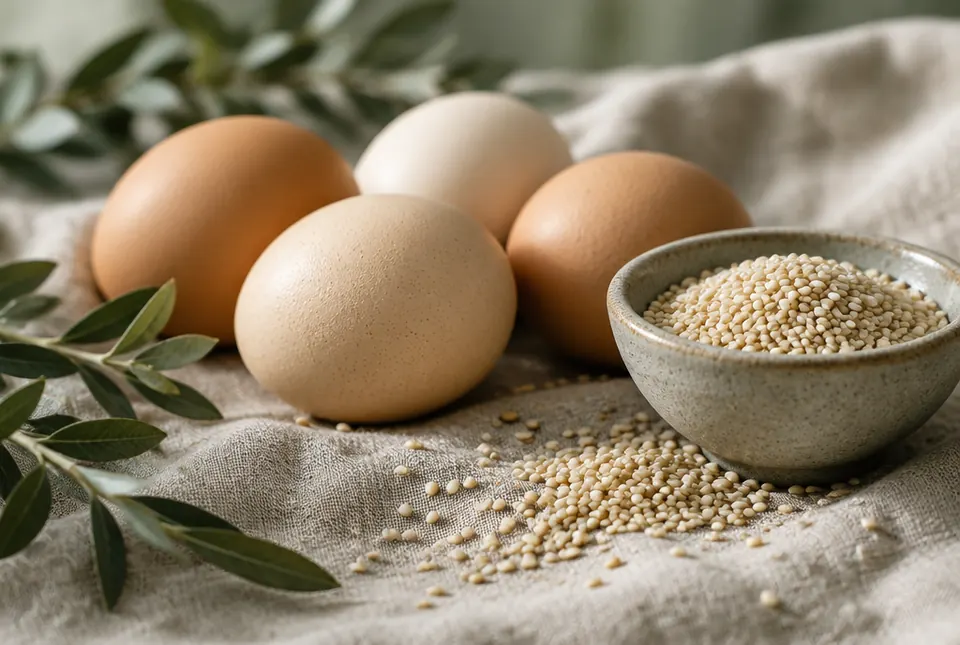
An essential sulphur-containing amino acid found in eggs, fish and sesame.

Why it’s used: Supplies sulphur used to build keratin in hair and nails.

eggs and sesame seeds on linen
About

What is l-methionine?

L-methionine is an essential amino acid that contains sulphur. The body cannot make it, so it must come from food. Good sources include eggs, fish, meat, dairy foods and sesame seeds.

Methionine is the starting point for many of the body's sulphur compounds. It can be converted into cysteine, which forms the disulphide bonds that give keratin, the protein in hair and nails, its strength. Methionine is also the precursor of homocysteine, and research shows that its effects on homocysteine are moderated by vitamins B6, B12, C and folic acid.

In supplements it appears as L-methionine, often in hair, skin and nail formulas alongside cystine, biotin and zinc. No health claims are authorised for methionine itself. A 2006 review of the evidence found that nutritional studies in adults and children using amounts both below and above requirements had not reported adverse effects, but that intakes far above normal dietary levels were linked to raised homocysteine.

What the research says

Evidence, not anecdote.

3 findings behind this ingredient. Hover a card for the detail and the source.

Preclinical2024

Mice fed a methionine-deficient diet lost hair, and hair growth resumed once methionine was restored.

Mouse feeding study. Hair loss appeared within 14 days on a methionine-restricted diet; after two weeks of restriction only dietary methionine, not homocysteine, restored hair growth.

Preclinical2020

Dietary methionine increased hair follicle density in rabbits and lengthened hair shafts in cultured follicles.

Study in 200 weaned Rex rabbits fed diets with varying methionine, plus cultured hair follicles. Added methionine significantly increased follicle density and hair shaft growth through Wnt/β-catenin signalling.

Preclinical2023

Methionine added to a low-protein diet restored wool yield and hair follicle development in Angora rabbits.

Feeding study in Angora rabbits on a low-protein diet. Adding 0.4–0.6% methionine reversed the drop in wool yield and restored expression of keratin-associated protein genes.

In our range

Supplements with l-methionine.

None of our current products contain it. Find the right supplement for you in six questions.

Questions

Asked before you buy.

Can't see yours? Ask our team, answered within a working day.

What does L-methionine do for hair?

Methionine supplies sulphur that the body can use to make cysteine, a key building block of keratin in hair and nails. That is why it appears in hair formulas. It has no authorised health claims, so it is best seen as one building block among many.

Is methionine safe?

At normal dietary levels, studies have not reported adverse effects in healthy adults. A 2006 review found that intakes higher than five times normal raised homocysteine, so stay within the label amount and speak to your GP if you have heart or liver problems.

What foods are high in methionine?

Eggs, fish, meat, dairy foods and sesame seeds are good sources of methionine. Because it is an essential amino acid, the body cannot make it, so it must come from protein-rich foods in your diet.

Sources
  1. Toxicity of methionine in humans · Journal of Nutrition (PubMed), 2006
  2. Effects of the Usage of l-Cysteine (l-Cys) on Human Health · Molecules (PubMed Central), 2018

Information only, not medical advice. If you take medication, are pregnant or breastfeeding, speak to your GP or pharmacist first.

Find your protocol

Not sure where to start?

Answer six quick questions and we will point you to the protocol or product that fits your goal. No email needed.

Start the assessment