Free US delivery over $250
Nutra Formulations
Nutrients and compounds

Digestive enzymes

Enzymes that break proteins, carbohydrates and fats into smaller pieces.

Why it’s used: Supplement the enzymes your body makes to help break down meals.

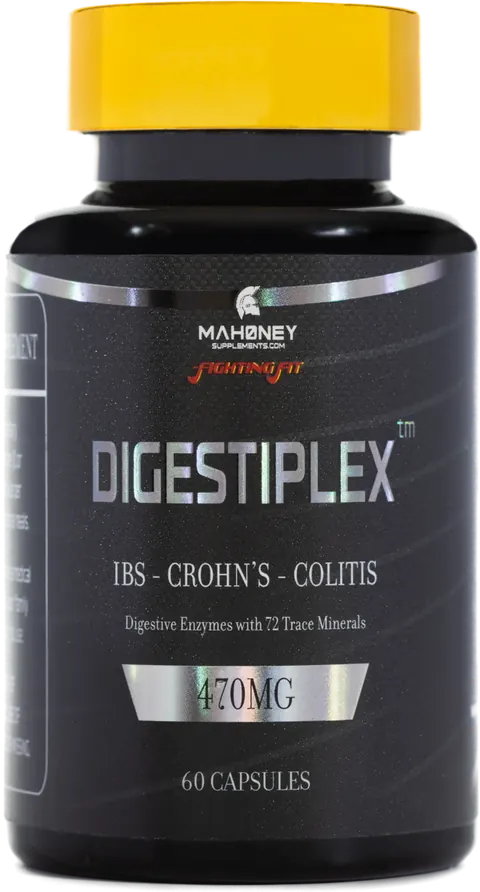
Shop 1 product with digestive enzymes
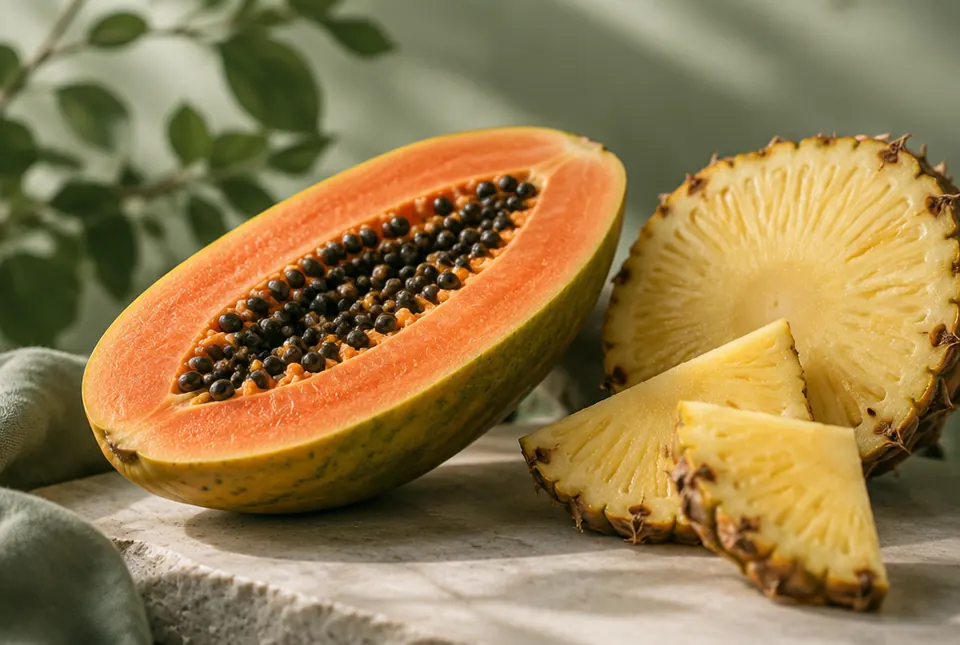
halved papaya and pineapple slices
About

What is digestive enzymes?

Digestive enzymes are proteins that break food down into pieces small enough to absorb. Your body makes its own, mainly in the saliva, stomach, pancreas and small intestine. Proteases break down protein, amylases break down starch, and lipases break down fat, while other enzymes handle particular sugars and fibres.

Digestive enzyme supplements contain a blend of these enzymes from several sources. Many are produced by fermentation using microorganisms such as Aspergillus fungi, which makes them suitable for vegetarians. Others come from plants, including bromelain from pineapple and papain from papaya. On labels you will often see each enzyme listed with an activity unit, such as HUT, DU or FIP, because how active an enzyme is matters more than its weight.

Supplements are designed to work alongside the enzymes your body already makes, usually taken at the start of a meal. They are different from pancreatic enzyme replacement therapy, a prescription medicine for people whose pancreas does not make enough enzymes. Persistent digestive symptoms always deserve a conversation with your GP rather than trying to manage them on your own.

What the research says

Evidence, not anecdote.

3 findings behind this ingredient. Hover a card for the detail and the source.

RCT2023

A fungal multi-enzyme blend reduced functional dyspepsia symptoms and improved quality of life and sleep compared with placebo.

A double-blind trial randomised 120 adults with functional dyspepsia to two capsules a day of a 200 mg multi-enzyme blend or placebo for two months. The enzyme group improved in quality of life, pain severity and sleep scores, without side effects.

RCT2018

A multi-enzyme complex improved all measured dyspepsia scores compared with placebo in adults with functional dyspepsia.

In a double-blind trial, 40 adults with functional dyspepsia took 50 mg of a multi-enzyme complex three times daily or placebo for 60 days. All efficacy measures improved significantly more than placebo; the study was run by the product's manufacturer.

RCT2015

Taking lipase before a high-fat meal reduced feelings of stomach fullness compared with placebo in healthy adults.

In a double-blind crossover trial, 16 healthy volunteers took 280 mg acid-resistant lipase or placebo before a fatty meal. Stomach fullness was significantly lower with lipase; bloating and nausea did not differ.

In our range

Supplements with digestive enzymes.

Questions

Asked before you buy.

Can't see yours? Ask our team, answered within a working day.

When should I take digestive enzymes?

Usually with the first bites of a meal, so the enzymes mix with your food as it reaches the stomach and small intestine. Taking them long after eating is less useful. Always follow the directions on the label, as products differ.

What do HUT, DU and FIP mean on a label?

They are activity units that measure how much work an enzyme can do. HUT is often used for protease, DU for amylase and FIP for lipase. Comparing activity units between products is more meaningful than comparing milligrams.

Are digestive enzyme supplements the same as prescribed enzymes?

No. Pancreatic enzyme replacement therapy is a prescription medicine for people with diagnosed pancreatic insufficiency, with carefully controlled doses. Over-the-counter digestive enzymes are food supplements and are not a substitute. Speak to your GP about ongoing digestive symptoms.

Shop by goal
Independent experts

Experts on digestive enzymes.

Videos from doctors, research scientists and registered dietitians, for general education. They are independent of Nutra Formulations, do not refer to our products and are not medical advice for you.

The Power of Digestive Enzymes and Stomach Acid: Bloating, Gas and Reflux

Dr Rajsree Nambudripad, MD, internal medicine · Rajsree Nambudripad, MD on YouTube

Digestive Enzymes: Does Your Body Make Enough, or Do You Need Supplements?

Dr Michael Klaper, MD · Doctor Klaper on YouTube

Sources
  1. Regulation (EC) No 1332/2008 of the European Parliament and of the Council of 16 December 2008 on food enzymes · legislation.gov.uk, 2008
  2. Food enzymes authorisation guidance · Food Standards Agency (GOV.UK), 2024
  3. Digestive Enzyme Supplementation in Gastrointestinal Diseases · Current Drug Metabolism (PubMed), 2016

Information only, not medical advice. If you take medication, are pregnant or breastfeeding, speak to your GP or pharmacist first.

Find your protocol

Not sure where to start?

Six quick questions match you to the products in our range that fit your goal, with the reasons why.

Start the assessment