Free US delivery over $250
Nutra Formulations
Nutrients and compounds

CLA

Conjugated linoleic acid, a fatty acid found in dairy and beef.

Why it’s used: Studied for its role in body composition alongside exercise.

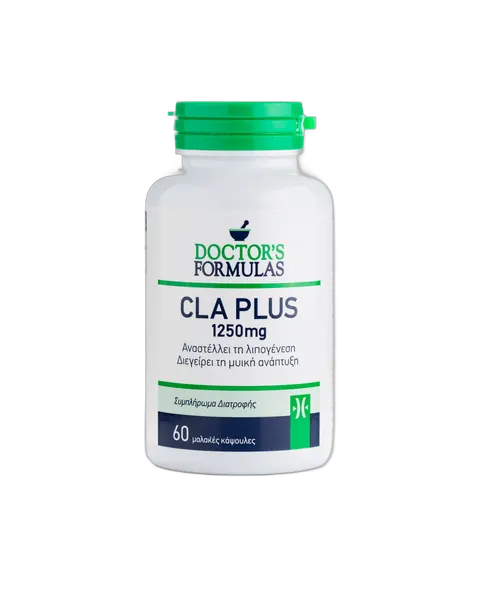
Shop 1 product with cla
safflower blossoms and golden oil droplets
About

What is cla?

CLA, short for conjugated linoleic acid, is a group of related fatty acids made by bacteria in the stomachs of cows, sheep and goats. That is why the main food sources are beef, lamb and dairy products such as milk, cheese and butter.

The two forms you will see discussed most are called c9,t11 and t10,c12, after the position of the double bonds in the molecule. Food CLA is mostly the c9,t11 form. Supplements are usually made from safflower or sunflower oil, and contain a roughly equal mix of both forms, labelled as conjugated linoleic acid, CLA or by branded names.

CLA is sold in softgels, typically as part of fitness and body composition ranges. Researchers have studied it in trials looking at body composition alongside exercise, with mixed results. EFSA reviewed the evidence for claims about reducing body fat and maintaining normal body weight and found it did not establish a cause and effect, so no health claim is authorised for CLA.


What the research says

Evidence, not anecdote.

3 findings behind this ingredient. Hover a card for the detail and the source.

Meta-analysis2024

CLA produced small but significant reductions in body weight, waist size and fat mass, and increased lean mass, in adults.

Meta-analysis of 70 randomised trials with 4,159 adults. CLA reduced body mass, BMI, waist circumference, fat mass and body fat percentage and increased fat-free mass; high-quality trials showed no change in fat mass.

Meta-analysis2023

CLA taken alongside exercise lowered body fat and insulin resistance more than exercise alone, without raising side effects.

Meta-analysis of 18 randomised and 2 crossover trials combining CLA with exercise. Body fat (SMD -0.42) and insulin resistance fell versus exercise alone; body weight, performance and blood lipids did not change.

Meta-analysis2007

CLA at around 3.2 g a day produced a modest loss of body fat compared with placebo.

Meta-analysis of 18 randomised, double-blind, placebo-controlled trials using validated body-composition methods. At a median 3.2 g a day, CLA reduced fat mass by about 0.09 kg a week versus placebo.

In our range

Supplements with cla.

Questions

Asked before you buy.

Can't see yours? Ask our team, answered within a working day.

What foods contain CLA?

Beef, lamb and dairy foods such as milk, cheese, butter and yoghurt are the main sources, because CLA is made by bacteria in the stomachs of grazing animals. Food amounts are small compared with supplements, which are usually made from safflower or sunflower oil.

Does CLA help with weight loss?

No health claim for weight is authorised. EFSA reviewed the evidence on CLA, body fat and body weight and concluded it did not show cause and effect. Researchers continue to study it alongside exercise, but it is not a weight-loss product.

How long can I take CLA for?

EFSA's safety assessment of one CLA ingredient covered use for up to six months, at up to about 3.5 g of CLA a day. Safety for longer than that was not established, so take a break and speak to your GP if you want to use it longer.

Shop by goal
Often found with
Sources
  1. Statement on the safety of the conjugated linoleic acid (CLA)-rich oils Clarinol and Tonalin TG 80 as novel food ingredients · EFSA (hosted by BfR), 2012
  2. Commission Regulation (EU) 2016/1411 refusing to authorise certain health claims · legislation.gov.uk, 2016

Information only, not medical advice. If you take medication, are pregnant or breastfeeding, speak to your GP or pharmacist first.

Find your protocol

Not sure where to start?

Six quick questions match you to the products in our range that fit your goal, with the reasons why.

Start the assessment