Magnesium glycinate vs citrate: which should you take?
2 October 2026 · 4 min read

The short answer
Choose magnesium glycinate if you want a gentle form for evening use, and citrate if you want a well-studied, well-absorbed form and do not mind a looser bowel.
Both are organic magnesium salts, which tend to be absorbed better than inorganic forms such as magnesium oxide. A 2021 systematic review of 14 studies comparing forms of magnesium reached the same general conclusion: organic formulations appear more bioavailable than inorganic ones, and absorption depends on the dose.
What the research does not give us is a clean head-to-head trial of glycinate against citrate. So the choice comes down to what you want magnesium for, how your digestion responds and what else is in the product.
What is the difference between magnesium glycinate and citrate?
The difference is the partner molecule: glycinate binds magnesium to the amino acid glycine, while citrate binds it to citric acid.
Magnesium glycinate (bisglycinate)
Magnesium glycinate, often labelled bisglycinate, pairs one magnesium atom with two molecules of glycine. It is sometimes called an amino acid chelate. People often choose it because it tends to sit comfortably in the gut, and it is the form used in the most recent sleep trial (more on that below).
Magnesium citrate
Magnesium citrate pairs magnesium with citric acid. It dissolves well in water and is one of the forms the NIH Office of Dietary Supplements lists as more easily absorbed, alongside aspartate, lactate and chloride. Like most magnesium salts, larger amounts can draw water into the bowel, which is why loose stools are the most common side effect of high doses.
Which is absorbed better?
Citrate has the stronger direct evidence, but glycinate also appears well absorbed, and the gap between them is not clear-cut.
The most quoted comparison is a 2003 randomised, double-blind study by Walker and colleagues. It gave 46 healthy adults 300 mg of magnesium a day for 60 days as citrate, amino acid chelate or oxide, or a placebo.
- On urine measures, both citrate and amino acid chelate were absorbed better than oxide.
- Citrate produced the highest blood (serum) magnesium, both after the first dose and after 60 days.
- Red blood cell magnesium did not differ between the groups.
Two cautions apply. The chelate in that study was not described specifically as glycinate, and the study was small. The 2021 review also warned that results in healthy volunteers may not carry over to older adults or people who are already low in magnesium.
Glycinate vs citrate at a glance
This table sums up how the two forms usually compare in everyday use.
| Magnesium glycinate | Magnesium citrate | |
|---|---|---|
| Bound to | Glycine (an amino acid) | Citric acid |
| Absorption evidence | Organic, chelated form; absorbed better than oxide in one trial | Organic form; highest serum levels in the 2003 comparison |
| Gut comfort | Usually gentle | More likely to loosen stools at higher amounts |
| Sleep research | Used in a 2025 trial in adults with poor sleep | Less direct sleep research |
| Often chosen for | Evening use, sensitive digestion | General top-up, people who welcome a looser bowel |
Which is better for sleep?
Glycinate has the more relevant evidence for sleep, although the effect seen so far is modest.
In a 2025 randomised, placebo-controlled trial, 155 adults aged 18 to 65 who reported poor sleep took either 250 mg of elemental magnesium as bisglycinate or a placebo every day. After four weeks, insomnia scores fell by 3.9 points in the magnesium group and 2.3 points with placebo. The difference was statistically significant but small, and the researchers noted that people with a lower dietary magnesium intake seemed to benefit most.
Magnesium also contributes to normal functioning of the nervous system and normal psychological function. That is the authorised wording, and it is a fair description of why magnesium is part of so many evening routines.
Which is better for tiredness and muscles?
For general tiredness and muscle function, the form matters less than getting enough magnesium overall.
Whatever the form, magnesium contributes to the reduction of tiredness and fatigue, normal energy-yielding metabolism and normal muscle function. If your diet is low in leafy greens, nuts, seeds and wholegrains, either glycinate or citrate can help you reach your daily needs. Some people use a blend of forms, such as glycinate with malate, to spread the load across different salts.
How much should you take?
Most adults need 270 to 300 mg of magnesium a day in total, and the NHS says 400 mg a day or less from supplements is unlikely to cause harm.
The NHS puts daily needs at 300 mg for men and 270 mg for women aged 19 to 64. The NIH sets a more cautious upper limit of 350 mg a day from supplements for adults, mainly because of the risk of diarrhoea. Always check the label for the amount of elemental magnesium, not the total weight of the compound.
Who should take care?
Most healthy adults tolerate both forms well, but some people should speak to their GP or pharmacist first.
- Kidney problems: reduced kidney function makes it harder to clear excess magnesium.
- Bisphosphonates and some antibiotics: magnesium can reduce how well these are absorbed if taken too close together, so space them apart.
- Diuretics and long-term proton pump inhibitors: these can change how much magnesium your body holds on to.
- Pregnancy and breastfeeding: check with your midwife, GP or pharmacist before starting any supplement.
If you get diarrhoea, nausea or stomach cramps, reduce the amount or stop and seek advice.
Our approach
If you are weighing up glycinate against citrate, a blend that leads with bisglycinate is a sensible middle path.
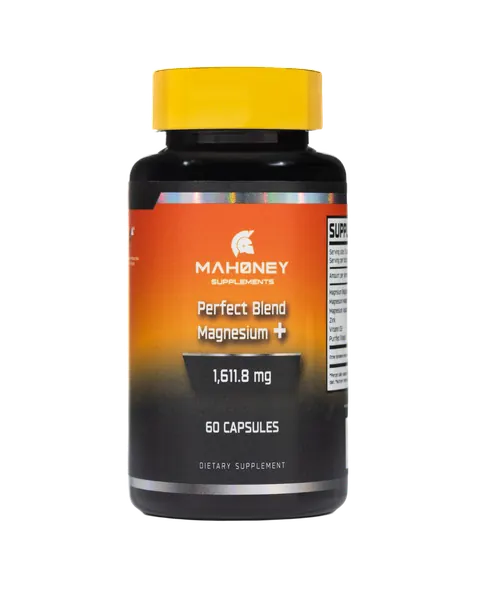
Perfect Blend Magnesium combines magnesium bisglycinate with magnesium malate and aspartate, alongside zinc, vitamin D3 and purified shilajit. It was formulated for people who want a well-absorbed, gentle magnesium as part of a calm daily protocol. You can also browse our wider sleep collection.
- Bioavailability of magnesium food supplements: A systematic review · Nutrition (Pardo et al.), 2021
- Mg citrate found more bioavailable than other Mg preparations in a randomised, double-blind study · Magnesium Research (Walker et al.), 2003
- Magnesium Bisglycinate Supplementation in Healthy Adults Reporting Poor Sleep: A Randomized, Placebo-Controlled Trial · Nature and Science of Sleep (Schuster et al.), 2025
- Vitamins and minerals: Others (magnesium) · NHS, 2023
- Magnesium: Fact Sheet for Health Professionals · NIH Office of Dietary Supplements, 2022
- Great Britain nutrition and health claims (NHC) register · GOV.UK, 2024